

AI boosts clarity, information for chest CT scans


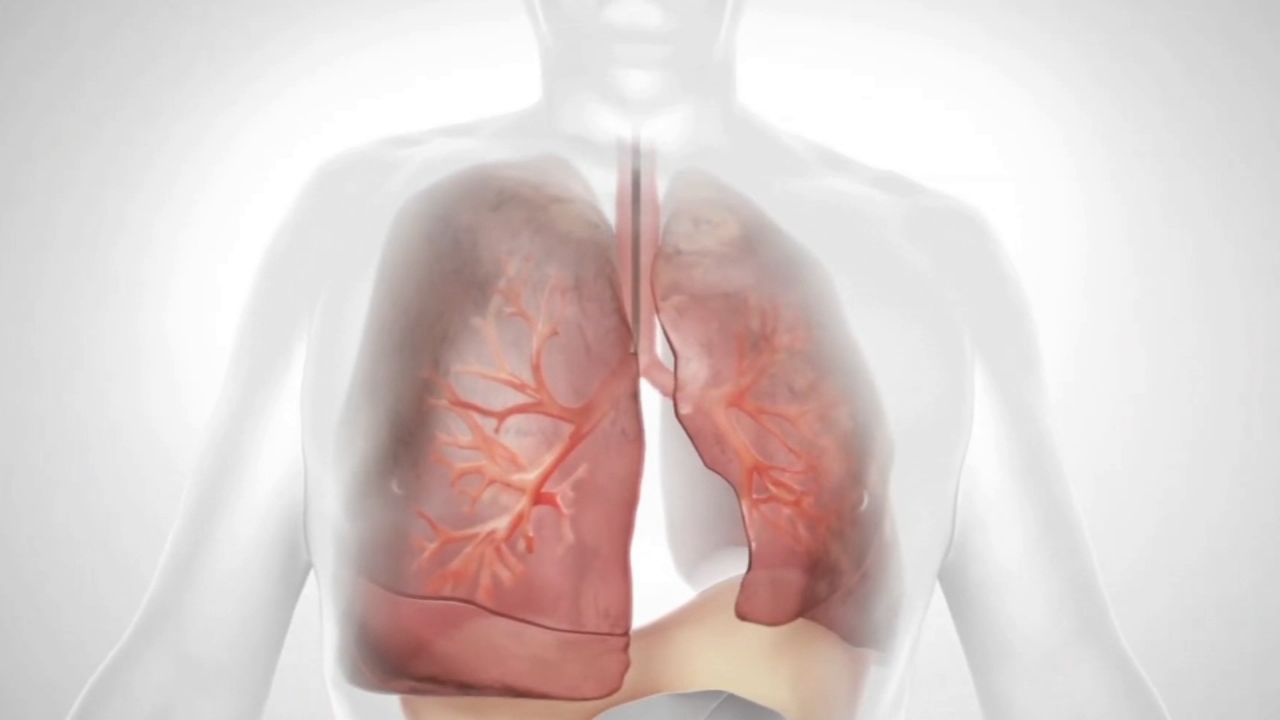
NEWARK, Del. (WPVI) -- Artificial intelligence is very controversial in many quarters. But in some areas of medicine, it's becoming an invaluable tool.
Carolyn Klair handled her COPD for 25 years, but early last year, it became too much.
"I wasn't able to walk up and down steps without using the rescue inhaler," she said. "I would get up in the middle of the night just to go to the bathroom and come back just gasping for breath."
Klair was referred to Dr. Gerard Criner of the Temple Lung Center for more intense treatment.
The CT scans she received there were processed through AI software.
"We do this on every scan that's done every day for the chest," Dr. Criner explains.
He says AI sharpens images of any nodules or growths and gives information current scans can't provide.
"If you do have emphysema, how much you have in different parts of the lung," he says. "Quantitate if they have coronary artery calcification, how severe it might be for that individual."
It also helps with other conditions the CT scans detect.
The AI data gives medical staff more assurance and confidence in talking to patients.
"They love it. They say it's the most important tool they have," he notes.


And it's more visual for patients.
"It's like a picture of their lungs instead of text and words, that they can see and say 'This is what I'm concerned about'," says Dr. Criner.
Human experts do review all the scans to make sure the AI information is accurate.
Seeing how much of her lungs had COPD, Klair opted for valves that deflated the sick portions, letting the healthy ones expand.
As the weeks went by, her breathing was better and better.
"I can't tell you the last time I used my rescue inhaler," Klair says proudly.
Now, it's no problem minding her grandson every day.
"Not only do I go up and down those steps, I go up and down them steps with the one-year-old on my hip and I am not out of breath," she says.
Dr. Criner says the AI has been a big asset to Temple's Healthy Chest Initiative for smokers and former smokers.
Patients can better see their lungs and understand why yearly screening is so important for early detection of lung cancer, as well as detecting other respiratory and cardiac problems.