Two civic engagement leaders helping next generation have better discussions

PHILADELPHIA (WPVI) -- Paid Sponsor Partnership: Philadelphia Corporation for Aging
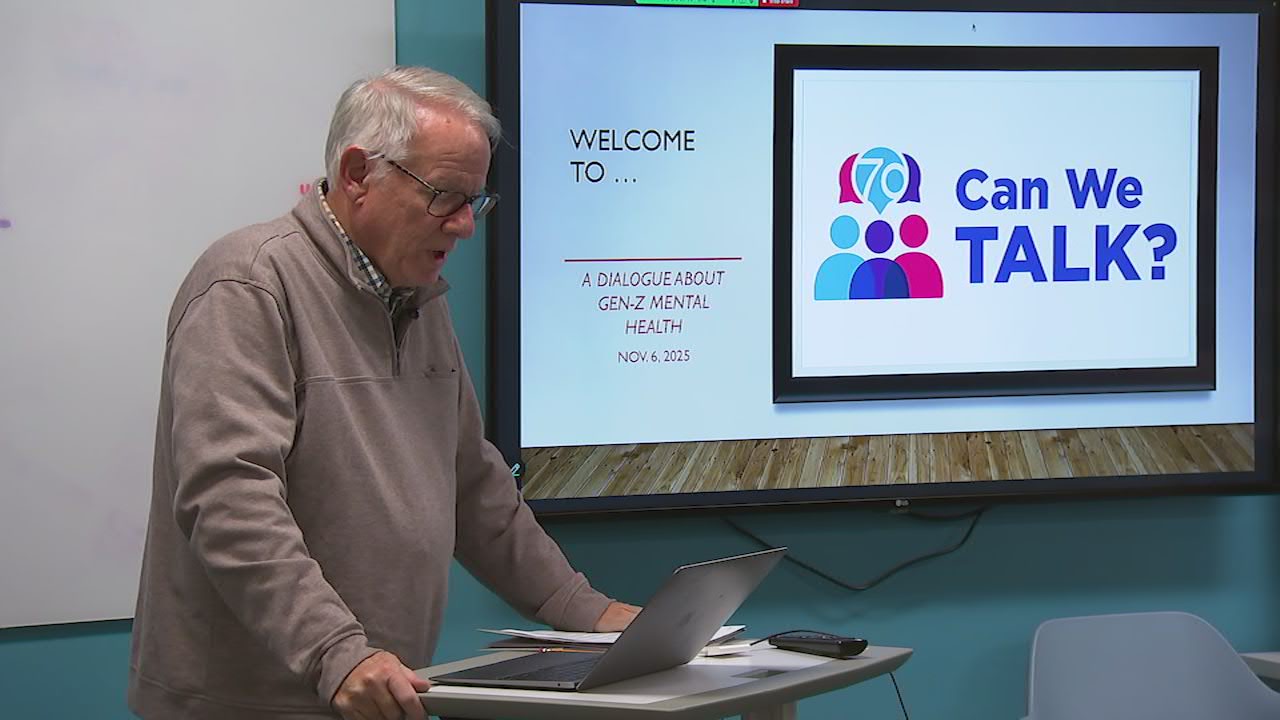
Chris Satullo is leading community dialogues in an initiative called, "Can We Talk?"
The most recent session took place at the Lindy Center for Civic Engagement on the Drexel campus in University City.
The goal is to teach students how to have productive conversations on difficult subjects.
"It's an initiative of the Committee of Seventy," says Chris Satullo, Co-Director, "Can We Talk?" Initiative. "The Committee of Seventy is Pennsylvania's oldest and still most active good government and civic education group."
Satullo co-directs the experiment, launched on Penn's campus in 2017, with longtime colleague Harris Sokoloff.
"It's been a wonderful experience, it really has. We both have very different strengths," says Harris Sokoloff, Co-Director, "Can We Talk?" Initiative. "My background is in philosophy, philosophy of education, social theory and Catholic psychology."
Satullo says he discovered this type of work as a way to deepen what he does as a journalist.
"Now, it's pretty much what I do," he says.
Satullo started at the Philadelphia Inquirer in 1989, later becoming editorial page editor. He says he started doing civic engagement work at the grassroots level with Sokoloff in 1995, so they've been "making public mischief" for 30 years.
In 2015, Satullo retired from WHYY where he was vice president for news and civic engagement.
Now, they hold "Can We Talk?" sessions in high schools and colleges across the area.
"We cover a lot of ground, usually five or six high-interest issues," says Satullo.
Topics range from pop culture stuff to abortion and immigration.
"We try to mix it up, so there's some things that connect with other parts of their soul, and their brain, and their hearts, so it's not just all the heaviest political issues," he says.
"The students are going to be discussing issues of their mental health," says Sokoloff.



Experts in the field present data and Drexel student body leaders help moderate talks in breakout groups.
"You kind of learn how to communicate in a professional and respectful way," says Lucy Nightingale, Undergrad Student Body Vice President at Drexel University.
"You have to listen differently if you're gonna respond differently, so we get them first to think about responding, not reacting," says Sokoloff.
The acronym THINK is one of the ground rules.
"Is what I'm about to say True? Is it Helpful? Is it Inspiring? Is it Necessary? And is it Kind? And if it's not at least two of those five, don't say it," says Satullo.
They encourage students to be brave.
"You're going to hear some things you don't like. And the idea of the brave space is, you can sit with that," he says. "You actually have a chance to learn and to grow."
Ultimately, it can help make students more employable.
"These are skills desperately needed in workplaces that are now based on collaboration," he says.
"Learning perspective from other students has been the most rewarding experience," says Nightingale.
"Anywhere that they go, they can take these skills and be effective and teach other people," says Satullo. "There is a better way of having political conversation that's productive, and in the end is fun, and creates relationships rather than destroying them."
For more information: Committee of Seventy - "Can We Talk?"