

Chipping away at challenges in pancreatic cancer


PHILADELPHIA (WPVI) -- Although pancreatic cancer remains one of the deadliest cancers, doctors and researchers are gradually chipping away at its challenges.
Last year, Pete Bosco wasn't quite sure what was wrong. Dark urine seemed to improve with drinking a lot of water.
"Shortly after, my wife noticed yellowing in my eyes," he remembers. "Initially they thought it was a gallstone that was causing a blockage."
After more than a week in the hospital, doctors determined it was a tumor in the head of his pancreas.
"It was a major shock," he says.
His research on options led to Dr. Sanjay Reddy, surgical oncology chief at Fox Chase Cancer Center and a chemotherapy-surgery 'sandwich.'
"The initial three months is to shrink things as best as possible to prepare for surgery," says Bosco.
Chemo after surgery kills floating cancer cells.
One challenge in pancreatic cancer is the stroma - a barrier tumors create - that cuts the effect of drugs and radiation.
"That's essentially this thick rind of tissue," says Dr. Reddy.
He says Fox Chase is studying drugs given between the first chemo and surgery aimed at breaking down the barrier.
"The scientists are vigorously working to see from the specimens that we've retrieved what responses they're seeing,"
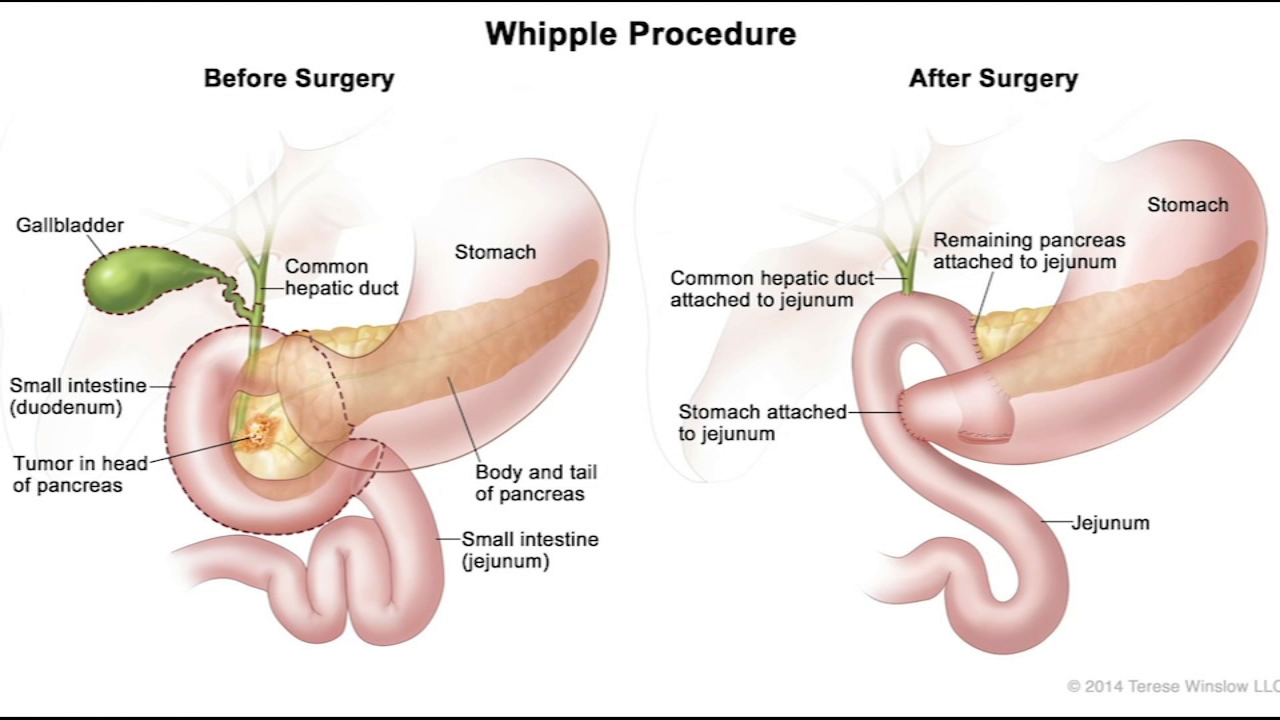
The primary surgery, called a Whipple procedure, removes part of the pancreas.
"Part of the small intestine, sometimes part of the stomach, part of that bile duct," Dr. Reddy says.
"So there's a lot of, you, re-plumbing that goes on," says Bosco.
His biggest challenge, though, was mental. The ups and downs from chemo, recovering from feeling "lousy for days" only to get knocked down again, were difficult. He had a great deal of nausea from the beginning.
"I didn't even make it the car ride home," he says of his trip home with daughter Melissa from his first treatment. "She had to stop two times on the way home."
He also recalls, "Dizziness, haziness, the cold sensitivity."
But this car-lover did get an emotional lift during his rough days, winning the chance to buy a special edition Mustang.
He looks forward to many drives in it, especially when warmer weather returns.
Bosco is now cancer-free and has begun sharing his story to support other patients and encourage research funding.
"The chance to participate and do what I can to give back something," he says.
Although he and his wife walked two or three miles almost every day during his treatment, he says his diet wasn't very good.
"Way too much sugar, not enough protein," he says..
Now he keeps sugar to a minimum.
Bosco is also speaking up for caregivers, like his wife and daughters, who also need support during a cancer experience.
He and his wife are planning a big trip next year, a slightly belated celebration of their 30th wedding anniversary.
"Some kind of trip that has a lot of spa visits and just relaxing rejuvenation and kind of reset," he says.