

Endometrial cancer is rising among older women, minorities


FOX CHASE (WPVI) -- More people than ever are living five years or more after a cancer diagnosis.
But while deaths are going down, some cancer themselves are not and minority women sometimes face a greater burden from some types.
"Endometrial cancer is on the rise," says Dr. Jason Conger, a gynecologic urologist at Fox Chase Cancer Center.
And Dr. Conger says it's now the most common cancer of the female reproductive system.
Also known as uterine cancer, it forms in the endometrium - the lining of the womb.
There's no specific screening test for it yet, though sometimes tests for cervical cancer will detect abnormal uterine cells.
"We just haven't found the right tool yet to screen for it," Dr. Conger explains.
Most of the time, endometrial cancer is found through symptoms.
"Any sort of vaginal bleeding in a postmenopausal woman should be taken quite seriously," he says.
And the cancer is far more common in women after menopause. The hormone estrogen drives several risk factors.
"Obesity is certainly a very common risk factor. And that's because, after menopause, those fat cells continue to manufacture estrogen," he says.
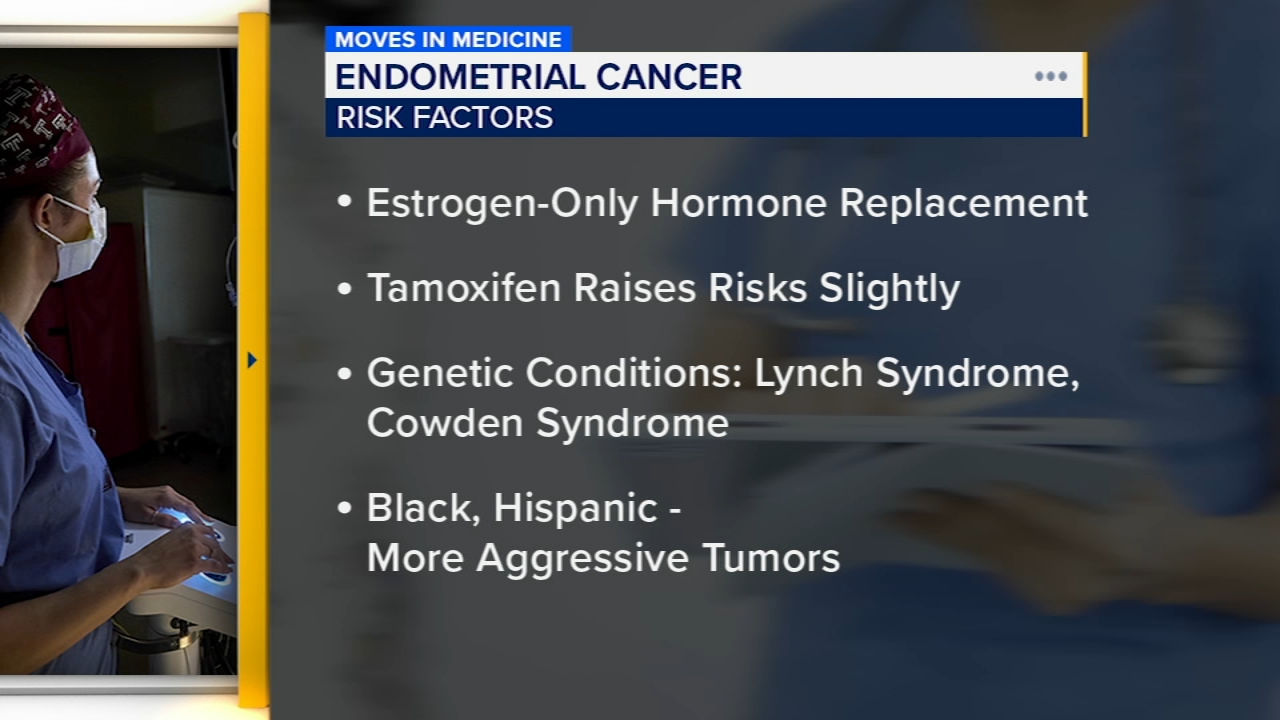
Estrogen-only hormone replacement therapy is another factor.
The breast cancer drug tamoxifen can also raise the risk slightly. It acts as an anti-estrogen in the breast.
"But can have a stimulating effect in the receptors in the uterus," Dr Conger notes.
Genetic conditions like Lynch Syndrome or Cowden Syndrome also raise the risk.
Black and Hispanic women face higher odds, and are more likely to develop aggressive tumors.
Dr Conger says Fox Chase is fighting back by genetically profiling every cancer to tailor treatment.
"The vast majority of women are diagnosed at early stage and cured with either surgery alone or surgery with some radiation," he says.
For advanced tumors, Dr. Conger says there are new drugs in trials.
But to reduce the cancer risk, he urges women to keep up with annual pelvic exams, even if they no longer need cervical cancer tests.