

Erectile dysfunction and diabetes connection is a link many men are unaware of


PHILADELPHIA (WPVI) -- Many men with ED - erectile dysfunction - think it's an isolated problem and don't tell their doctors. However, they should because ED could be the sign of a more serious health condition.
Dr. Jay Simhan, a urologist with the Fox Chase - Temple Urologic Institute, calls it an "oh-by-the-way" problem.
"When you're finishing up the consultation, the patient then says - Oh, by the way, I also have trouble with my erection," Dr. Simhan says.
He says not only are men bothered by it, it might be the main reason they came in.
Although 30 to 40 million men may be diagnosed with ED, Dr. Simhan says the impact is wider.
"Show me a man who doesn't have a partner," he said.
So in all, 70 million Americans are affected by it.
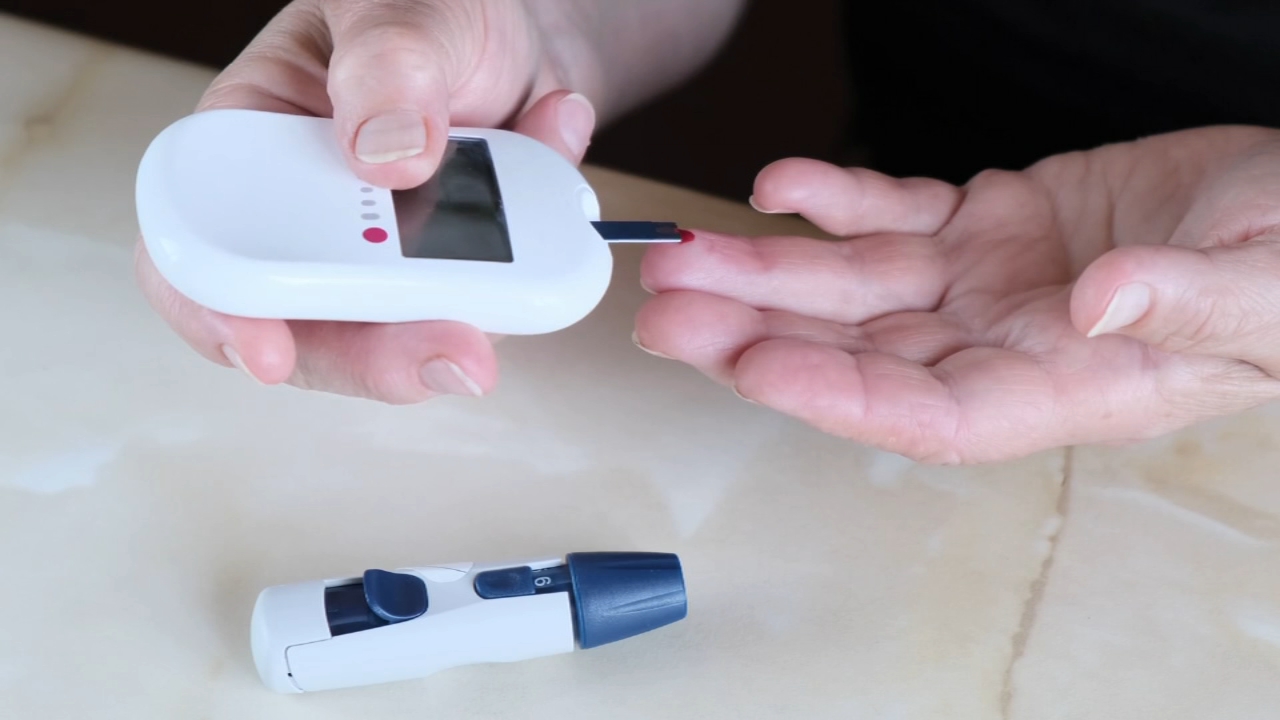
Most men don't realize that ED alone isn't a sign of getting older. But it can be a sign of undiagnosed or poorly controlled diabetes - particularly Type 2 diabetes.
Diabetes more than triples the risk of ED, often starting 10 to 15 years earlier than in men without diabetes.
"There's abnormal processing of the sugar levels in your body. And really that leads to a lot of changes in the vascular system," Dr. Simhan explains.
Changes like inflammation, stiffening of artery walls, and narrowing of large and small blood vessels.
For the 30 to 50 million men with ED, vascular problems are the most common cause.
"I've seen many men with erectile dysfunction that are then diagnosed with diabetes," Dr. Simhan says.
He says 95% of cases are treatable, if there's an early diagnosis and aggressive treatment with medication and lifestyle changes.
In Temple's team approach, both urologists and primary care doctors work together to stave off diabetes damage to the circulatory system.
"One of the most important ways a diabetic patient can improve not only their life, but their quality of life, is to get their blood sugars under better control," Dr. Simhan says. "If there's damage to it, a lot of times, the damage is irreversible."
The goal is a good quality of life for both patient and loved one.
"The Urologic Institute really prides itself in delivering compassionate care to patients that have these sports of problems," says Dr. Simhan.
And he says there a wide range of treatments, and improves by the year.