

Keeping the thyroid gland in balance


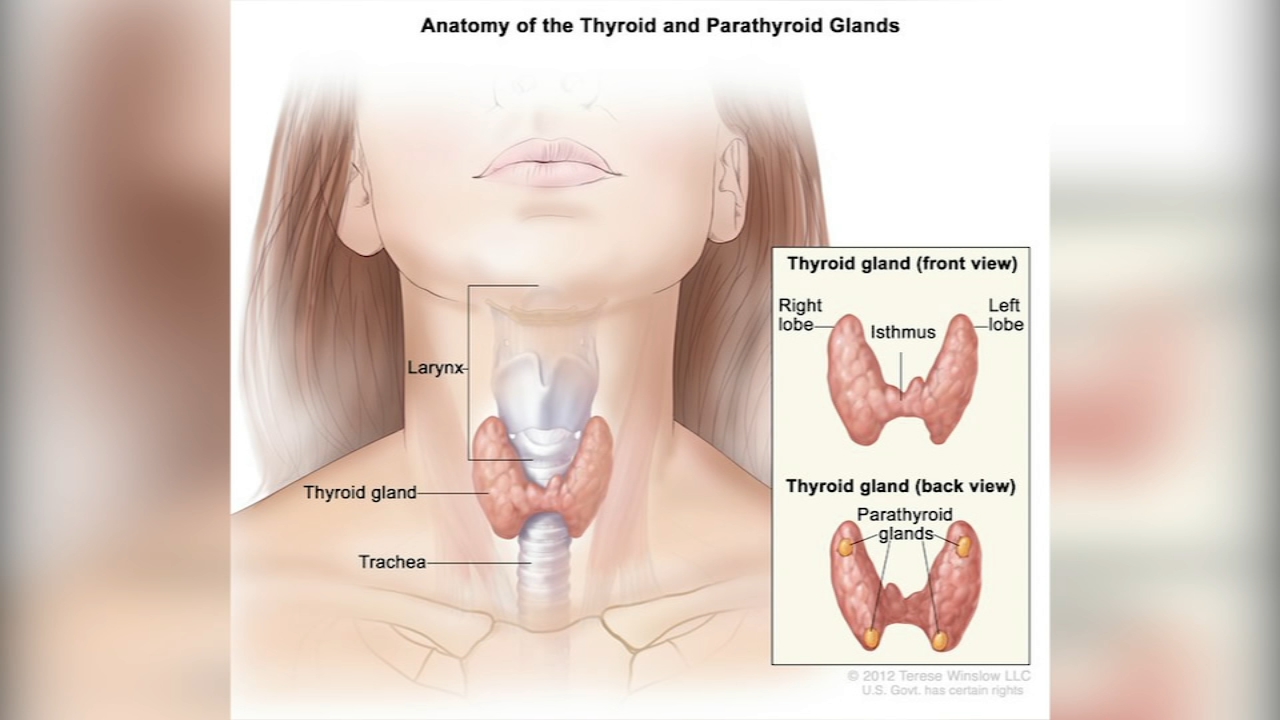
PHILADELPHIA (WPVI) -- The thyroid is a small gland with a big job. When it malfunctions, it can affect the body in many ways.
It's the butterfly-shaped gland just below the Adam's apple.
"And it is needed by pretty much every cell within the body," says Dr. Jonathan Anolik, a Temple Health endocrinologist.
Dr. Anolik says thyroid hormones affect overall metabolism, plus heart rate, breathing, digestion, brain development, skin and bones, body temperature, and more.
He says thyroid problems are much more common in women.
"It's a seven to eight to one ratio in terms of female to male," he says.
And underactive thyroid caused by Hashimoto's disease is a very common form.
"That's an autoimmune condition where your body essentially is attacking your thyroid gland," he explains.
As a result, the thyroid can't produce enough of its hormone.
To diagnose it, doctors so a blood test looking for TSH - thyroid stimulating hormone. The pituitary gland produces more of it when the thyroid slows down.
If TSH levels don't drop to normal on their own in a few months, and if antibodies appear in the blood, it's time for thyroid hormone replacement.



Dr. Anolik says the goal is for consistent hormone levels. So adjustments may be needed, especially after a big weight gain or loss, starting or stopping birth control pills, pregnancy, or menopause.
Generic thyroid medications may also require adjustments.
"Your pharmacy can get different manufacturers, generics, different times," says Dr. Anolik.
An underactive thyroid can be difficult to recognize, because symptoms can overlap other conditions, including menopause.
"Dry skin, constipation, hair can get dry and break. You can get fatigue, weight gain," Dr. Anolik notes.
Sensitivity to cold is also common.
"So there's fights about the thermostat at home," he says.
If you are on thyroid medication, make sure your doctor knows the other drugs AND supplements you take, such as iron or biotin. They can interfere with levels and test readings.