

Explaining what the name change from PCOS to PMOS means


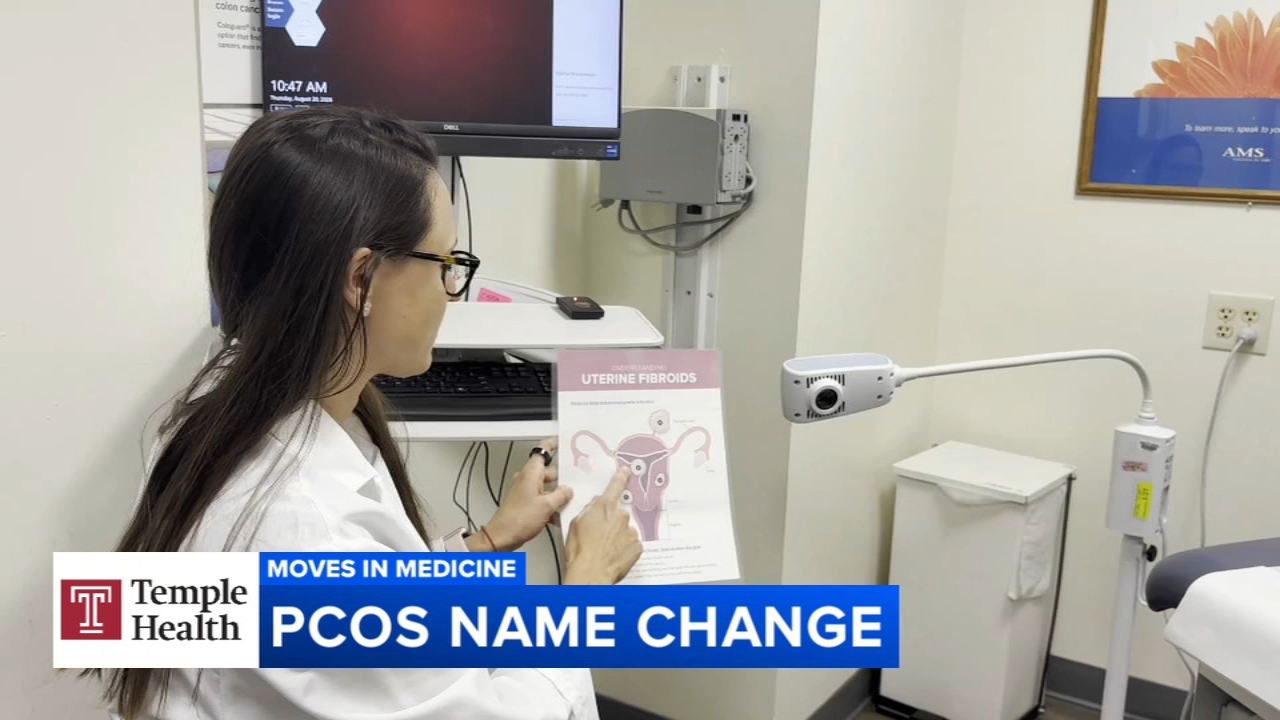
PHILADELPHIA (WPVI) -- Changing the name of a condition or disease may seem trivial. However, it's often done to improve the diagnosis and care of people with the condition.
That is the case in the recent change of PCOS to PMOS.
Since Polycystic Ovary Syndrome was identified in 1935. Doctors learned it's a prime cause for female infertility, affecting about one in 10 women, although 70% of women don't know they have it.
Now, doctors also realize how multi-faceted it is.
"It's not just with the ovaries, it has to do with a lot of other hormones in the body," says Temple Health-Chestnut Hill gynecologist Patricia Eliasinski.
So Dr. Eliasinski says PCOS is now PMOS: Polyendocrine Metabolic Ovarian Syndrome.
"The really interesting thing about all these different hormones is just their huge impact on the rest of the body," she says.
Excess androgen hormone causes excess hair growth.
"Either on their upper lip, chin, on the chest. We'll see an increase in acne, too," she says.
PMOS can also double or triple the risk of anxiety and depression.
It also affects the body's handling of insulin, which controls blood sugar.
Top Stories



"Women really struggle with weight," she explains.
Diabetes, heart disease, and sleep apnea are also bigger risks.
Ovulation and monthly cycles often become irregular, hampering fertility.
Dr. Eliasinski says making a PMOS diagnosis is very individualized.
"How much is this impacting your life? What are your symptoms? What do we need to treat? What don't we need to treat?" she says.
She says PMOS treatment takes a multidisciplinary team - a gynecologist, primary care doctor, endocrinologist, and sometimes a nutritionist or therapist.
Although there are no specific medication for PMOS, Dr. Eliasinski says the GLP-1 drugs show good results by controlling blood sugar and bring down weight.
"Hopefully that is going to open up more doors for people that have been struggling with this," she says.
The cause of PMOS is unknown, but there's extensive research going on, focusing on genetics, lifestyle, and environmental factors.