Jury begins deliberations in Lindsay Clancy's trial in killings of her 3 children
Clancy has pleaded not guilty to three murder charges.

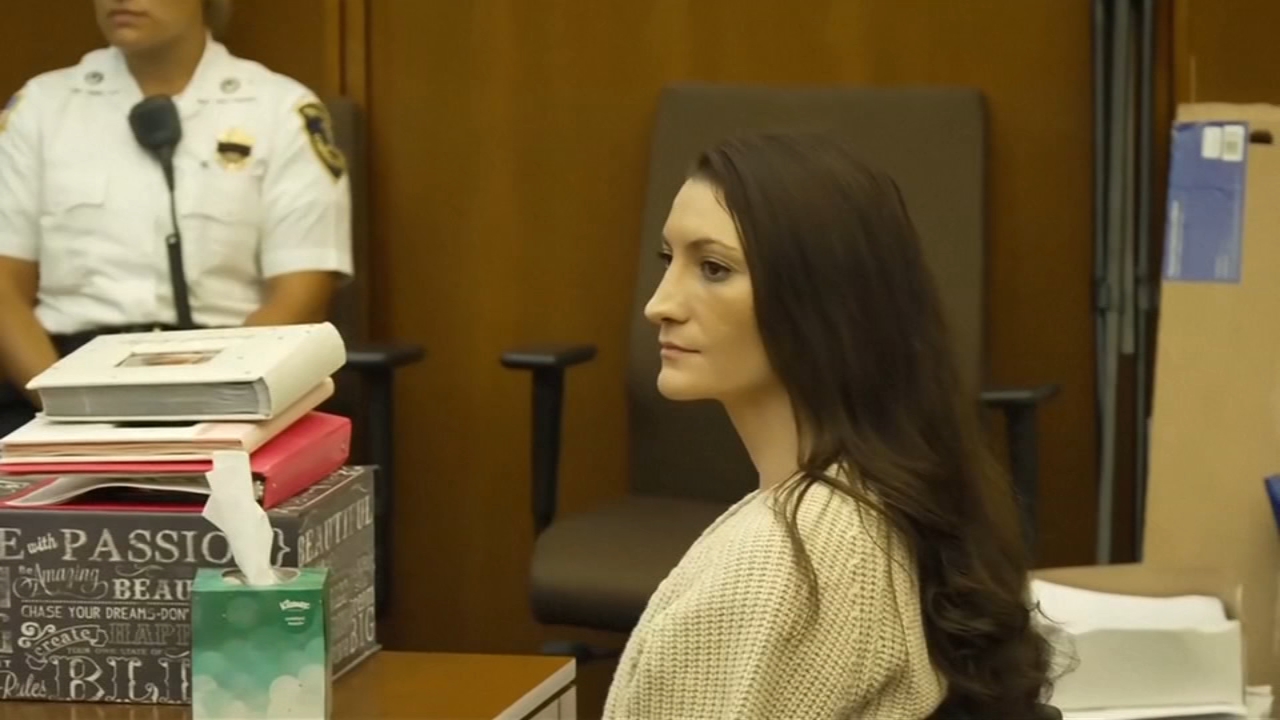
PLYMOUTH, Mass. -- The jury began deliberations on Thursday in the murder trial of Lindsay Clancy, a Massachusetts mother accused of strangling her three young children in a case that has drawn attention to postpartum mental health.
Proceedings resumed around 9 a.m. ET in Plymouth Superior Court. The prosecution and defense will each have an hour to make their final case before the jury receives instructions and begins deliberating.
Before closing began, Judge William Sullivan instructed the jury how to view the law in the case.
Sullivan told jurors that Lindsay Clancy is "not criminally responsible for her conduct if she has a mental disease or defect, and as a result of that mental disease or defect, she lacks the substantial capacity, either to appreciate the criminality or wrongfulness of her conduct, or to conform her conduct to the requirements of the law."
Jurors were told that the burden is on prosecutors to prove that Clancy was not suffering from a "mental disease or defect" so severe she could not tell the difference between right and wrong.
If Clancy is found "not guilty by reason of lack of criminal responsibility," she would be sent to a state psychiatric facility until it is deemed she "is no longer mentally ill and dangerous," Sullivan told the jury.
Sullivan ended his jury instruction by telling the jurors about the lesser included offense of manslaughter.
The judge also instructed the jury how to consider whatever impairment may have been caused by Clancy's mental illness of the medications she was prescribed.
Defense blames ' the damn medicine and the lousy medical care'
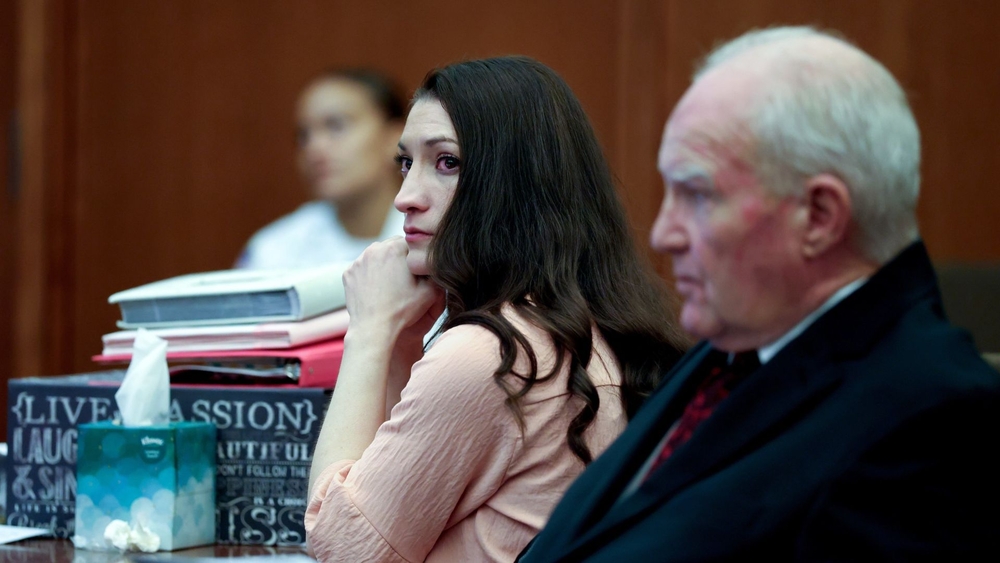
Defense attorney Kevin Reddington began his closing argument by showing the jury two photos - a happy image of the entire Clancy family next to a photo of severely-injured Lindsay Clancy on a hospital bed following her suicide attempt.
"How does this - turn into this?" Reddington asked. "Because of the damn medicine and the lousy medical care that she got."
He argued that Clancy repeatedly sought help from the medical system, but that she was overmedicated and misdiagnosed.
"Lorazepam, sertraline, hydroxyzine, lorazepam, buspirone, lorazepam, busferone, trazodone...It goes on and on and on and on and on," Reddington rattled off to the jury while holding up a list of her prescriptions. "She took the drugs as she was told to take them. She was religious in her obligations to take care of her health."
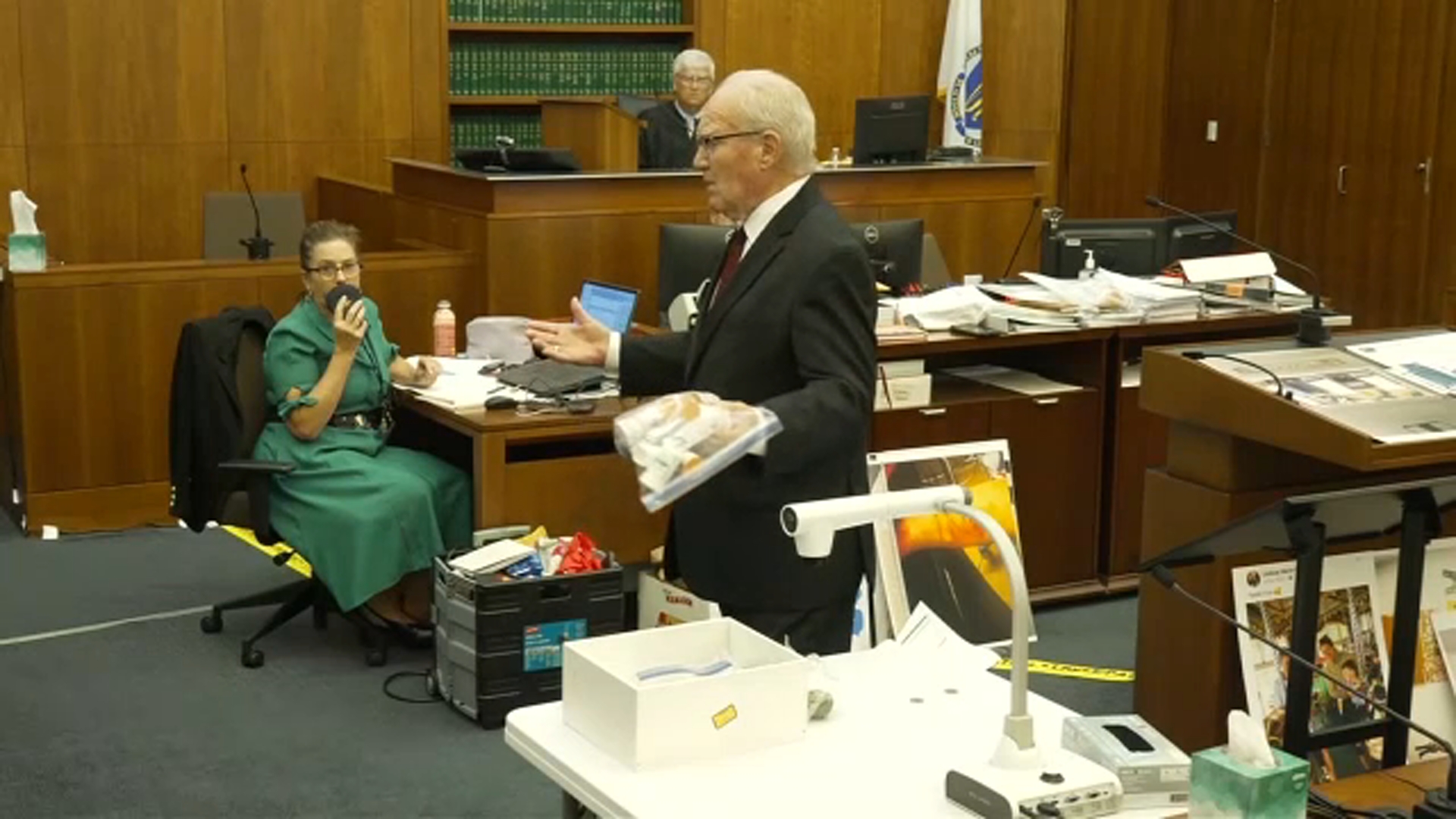
Speaking in harsh and sarcastic tones towards the prosecutors, Reddington accused them of furthering Clancy's suffering by suggesting her suicide attempt was not serious, scrutinizing her medical records, and having experts question her state of mind. Judge William Sullivan at one point reminded Reddington to talk to the jurors.
"God forbid, she's not curled up in the fetal position, wailing, self-flagellating constantly. For three and a half years, she's acting like a human being trying to exist, but they go through the records, and they want to get those dates and use them against her," Reddington said. "Manipulation!"
Reddington also highlighted the evidence and testimony showing that Clancy was a caring mother, suggesting she had no motive to kill her children.
"This young lady did nothing wrong in her life. She was a nurse, a daughter, a wife, and a darn good mother," he said.
Prosecutor references Clancy's experience as labor and delivery nurse
Prosecutor Jennifer Sprague began her closing by arguing this trial is "not about our mental health system or how it treats women."
"There's no dispute that Lindsey Clancy was suffering from mental illness and that she tried to kill herself. There's no dispute about that. All of the evidence that you've heard, even the experts that the Commonwealth put before you say that she was suffering from mental illness and she tried to kill herself. That's not the issue in this trial. The issue is whether, at the time she killed Cora Dawson and Callen, she knew the difference between right and wrong, and whether she could conform her behavior to the requirements of the law," she said.
"This case is not about our mental health system or how it treats women....That's a distraction to get you angry and passionate about an important issue, but an issue that's not on trial here," she said.
Prosecutor Jennifer Sprague argued that Lindsay Clancy strangled her children because they were the only "protective factor" preventing her from trying to kill herself.
"It was a choice to take them with her. It was a horrible choice, and it's a choice that we don't want to think about that a mother could make because that doesn't make us feel safe or comfortable in this world. But it's a choice she made," she said.
She then recounted Patrick Clancy's testimony about when he came home to find Lindsay Clancy following the killings and her suicide attempt.
"When he gets home, put the things on the counter, and it's quiet. It's quiet in a way that a house with three kids under five should not be during waking hours," she said.
Addressing what motivated Clancy, Sprague argued that she was suicidal and that the children were the "protective factor" preventing her from trying to kill herself.
Sprague also highlighted Clancy's work experience as a labor and delivery nurse to argue she should have known better.
"She knows as a nurse the importance of following the instructions of your medications. She knows how important it is to follow the plan and do what's on the bottle and do what your provider tells you and to give that accurate information to your provider," she said.
Pushing back on the suggestion that the trial is a referendum on the healthcare system, Sprague argued that Clancy had better-than-average access to medical care but did not properly use it.
The prosecution ended their closing argument by 11:53 a.m. ET.
Jury begins deliberations
The jury in the murder trial of Lindsay Clancy have begun their deliberations.
"Our system of justice is counting on you to render a fair decision based on the evidence and not on biases. Please have confidence in what you're about to do," said Judge William Sullivan. "I have that confidence in you. I don't think I've ever seen a more dedicated group of jurors in any trial that I've ever been involved in."
Judge Sullivan gave the jury additional instructions about the law before sending them off to begin deliberating around noon.
The court clerk randomly selected the 12 jurors. 18 jurors were selected at the beginning of the trial, including six alternates.
It is not clear how long the jury will take before a verdict is reached.
If convicted of murder, Clancy faces a mandatory life prison sentence. If jurors find her not guilty because she lacked criminal responsibility, she would not face prison time but could be committed to a psychiatric facility.
This is a developing story.
If you or someone you know is struggling with thoughts of suicide, call or text 988 or chat 988lifeline.org. Free, confidential help is available 24 hours a day, 7 days a week. You are not on your own.
Clancy did not testify during the trial, which is in its fifth week. Prosecutors called more than 70 witnesses, including Clancy's then-husband, while the defense called 10 witnesses, including some of Clancy's friends and relatives.
Multiple psychologists and psychiatrists also testified about Clancy's mental health, which is the central issue in the case.
Clancy, 36, has pleaded not guilty by reason of lack of criminal responsibility, with her lawyers arguing she was experiencing postpartum psychosis when she killed 5-year-old Cora, 3-year-old Dawson and 8-month-old Callan Clancy at the family's home in coastal Duxbury in January 2023 before attempting suicide. Postpartum psychosis is a rare mental illness that is linked to the stress, sleep deprivation and hormonal changes that follow childbirth.
Prosecutors say Clancy planned the killings and understood her actions were wrong.
Testifying Wednesday as the final rebuttal witness for the prosecution, a forensic psychiatrist at the University of Virginia and a senior psychiatrist for the FBI's Behavioral Analysis Unit said he did not believe Clancy's account that a voice ordered her to kill the children.
Prosecutor Jennifer Sprague asked Dr. Gregory Saathoff a series of questions about Clancy's account: Did the voice tell her where to kill the children? How to kill them? What to use? In what order? Saathoff answered no each time.
All three children were strangled with exercise bands in the family's basement before Clancy jumped from a second-floor window while her husband went to pick up takeout and medication on Jan. 24, 2023. Saathoff said her ability to accomplish everything she did without direction indicated Clancy "had control, control of the sequence of what she was doing throughout."
Defense attorney Kevin Reddington asked Saathoff about Clancy's attempts to search online for information about postpartum depression, her visits to multiple maternal and mental health providers, disclosures to her mother and then-husband that she was suicidal and feared that she would harm her children, and calls to a suicide hotline - all attempts that Reddington contends establish that Clancy realized something was seriously wrong and made a sincere effort over time to get help.
Reddington, referencing the prosecutor's opening statement, asked whether Saathoff believes that Clancy decided to kill her children because she "no longer liked the life she thought she wanted" and was making "a selfish choice" to "manipulate her providers, seek out a quick and easy fix when she was feeling depressed and anxious."
"I think that statement that you read really minimizes what she was going through," Saathoff responded.
AP News contributed to this report.
PREVIOUS COVERAGE: