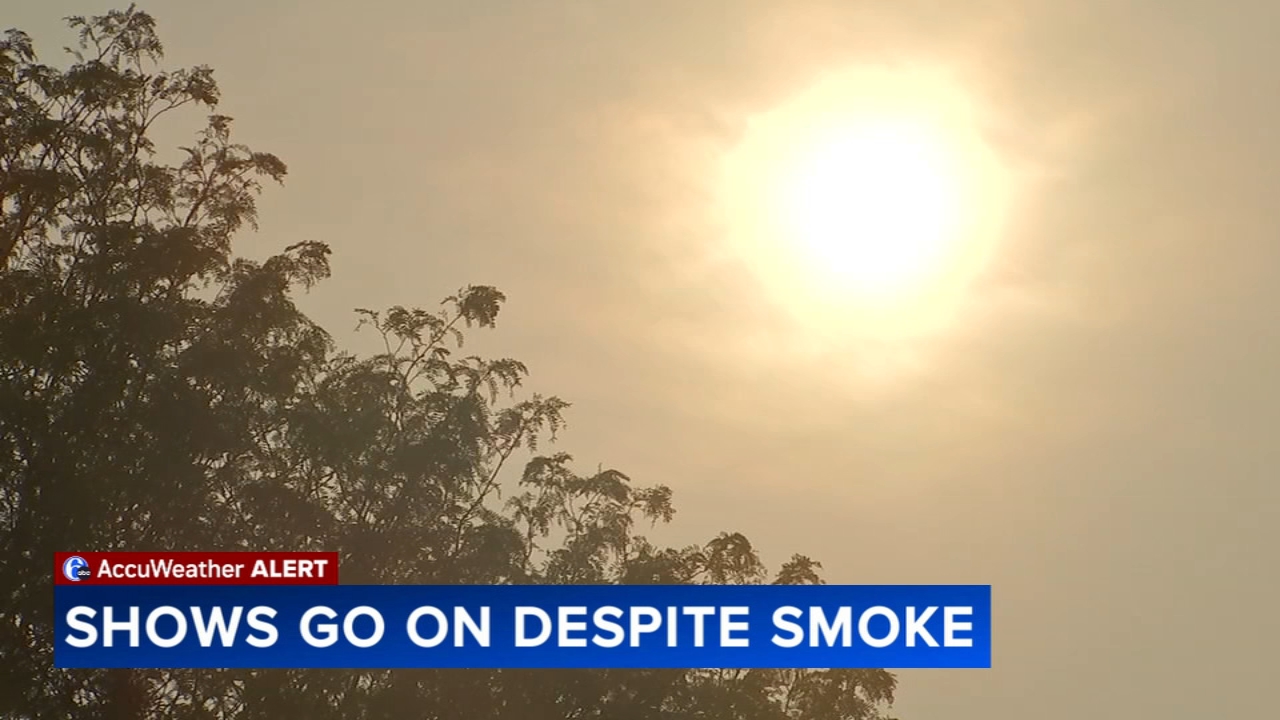

Can wearing a mask help as smoke from Canadian wildfires blankets the US?
For those who need to work outdoors, are more sensitive to smoke or are in a high-risk group, wearing a mask can help protect you -- as long as it's the right kind of mask.
Kai Chen, an associate professor of epidemiology at Yale School of Public Health, told ABC News that the best type of mask to wear is an N95, which is designed to filter at least 95% of airborne particles.

Chen said wildfire smoke is made up of fine solids, gases and fine particles, the latter of which is the most concerning.
Fine particulate matter, known as PM2.5, is 30 times smaller in diameter than a human hair. Because these particles are too small to be seen with the naked eye, they can easily enter the nose and throat and can travel to the lungs. These tiny particles get trapped in the lungs, and some of the smallest particles can even circulate in the bloodstream, according to the American Lung Association.
PM2.5 can cause both short-term health effects, even for healthy people, including irritation of the eyes, nose and throat; coughing, sneezing and shortness of breath and long-term effects such as worsening of conditions including asthma and heart disease.
"In order to protect yourself from that, we really need powerful filtration ... wearing an N95 mask is key," Chen said. "The normal surgical mask, unfortunately, would not be good enough."
Chen said surgical masks can block the majority of respiratory droplets from a cough or a sneeze but are not effective at filtering PM2.5. Similarly, paper dust masks, cloth masks, wet cloths and bandanas are not effective at filtering out fine particulate matter, he said.
Chen said people should make sure their N95 mask is certified by the National Institute of Occupational Safety and Health. The N95 should have two straps that go around the head and fit over the nose and under the chin, creating a tight seal.
N95 masks will not work properly without a tight seal, so children or people with facial hair might get reduced protection. Most healthy people can wear them safely, but some may notice it takes more effort to breathe due to the snug seal.
If you develop significant shortness of breath, dizziness while wearing an N95 mask, remove it once you are in a safe cleaner-air environment, and seek medical attention if symptoms do not improve.