Hydrogen fuel cell vehicles face uphill battle in U.S. market | Driving Into the Future


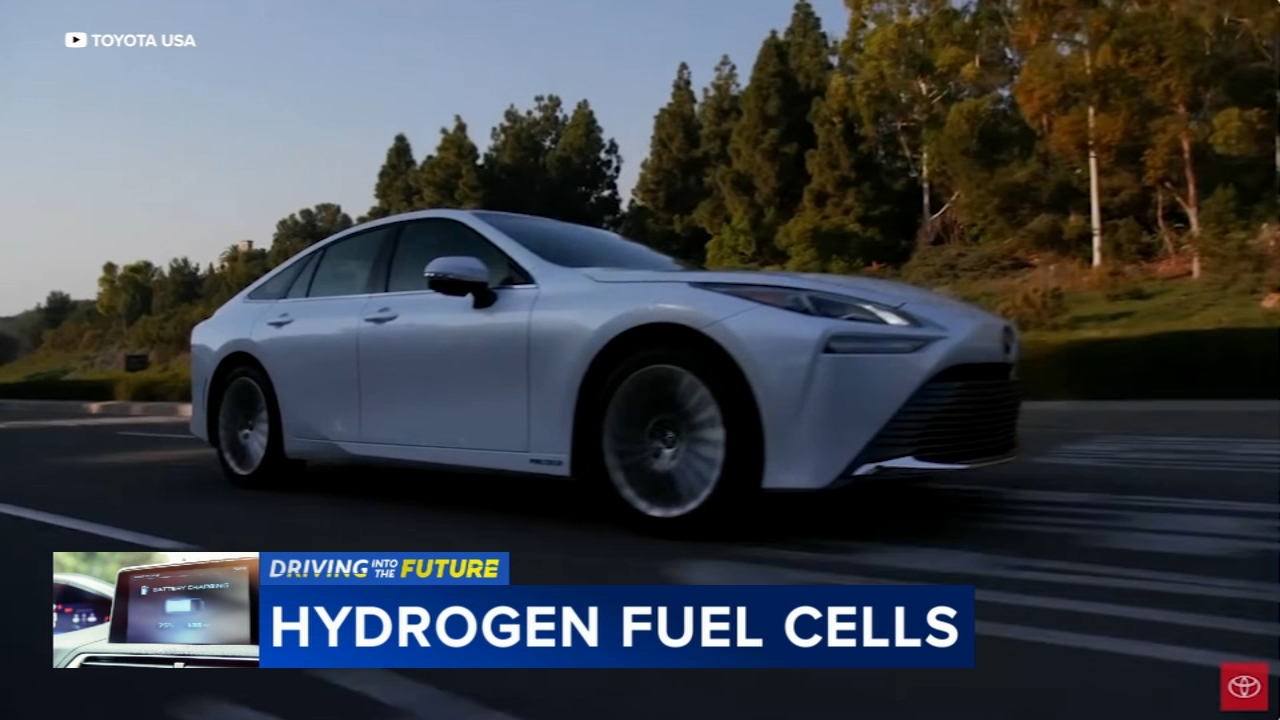
PHILADELPHIA (WPVI) -- Hydrogen fuel cell vehicles promise a cleaner future for transportation, but their adoption in the United States remains limited due to infrastructure and logistical challenges.
These vehicles generate electricity by converting hydrogen in fuel cells, producing only heat and water as byproducts. Despite their near-zero emissions, they are rarely seen on American roads outside of California, the only state with a fueling infrastructure in place.
Major automakers such as Toyota, Hyundai, and Honda have introduced hydrogen fuel cell models, but sales have been modest. Fewer than 20,000 units have been sold or leased nationwide as of the end of July.
"It really is kind of a niche technology that isn't something that's probably going to be seen in mainstream passenger cars, at least not for a very long time in the United States," said Keith Barry of Consumer Reports.
Some organizations are exploring the technology. The Philadelphia Eagles maintain a charging station for a small fleet of hydrogen vehicles at Lincoln Financial Field, and SEPTA is conducting research and testing on its buses.
Barry, who has test-driven hydrogen fuel cell vehicles, noted their similarity to conventional cars in terms of performance. However, he highlighted a major drawback.
"Just the main difference was that when I was done driving it, it had to go on a truck and had to go back to California to get refueled," he said.
The lack of infrastructure is just one of several hurdles. Production, storage, safety, and cost issues also hinder widespread adoption. Although refueling a hydrogen vehicle takes about the same time as filling a gas tank, hydrogen's properties require high-pressure tanks or cryogenic temperatures, making storage and transport difficult.
"It may be something used by fleets. But I think for the average consumer, you're probably not going to see a hydrogen car anywhere in Philly anytime soon in your driveway," Barry said.
Experts point to the convenience of charging electric vehicles at home as a key factor in their growing popularity. As the automotive industry continues to evolve, hydrogen fuel cell technology remains on the fringe-promising, but not yet practical for most drivers.