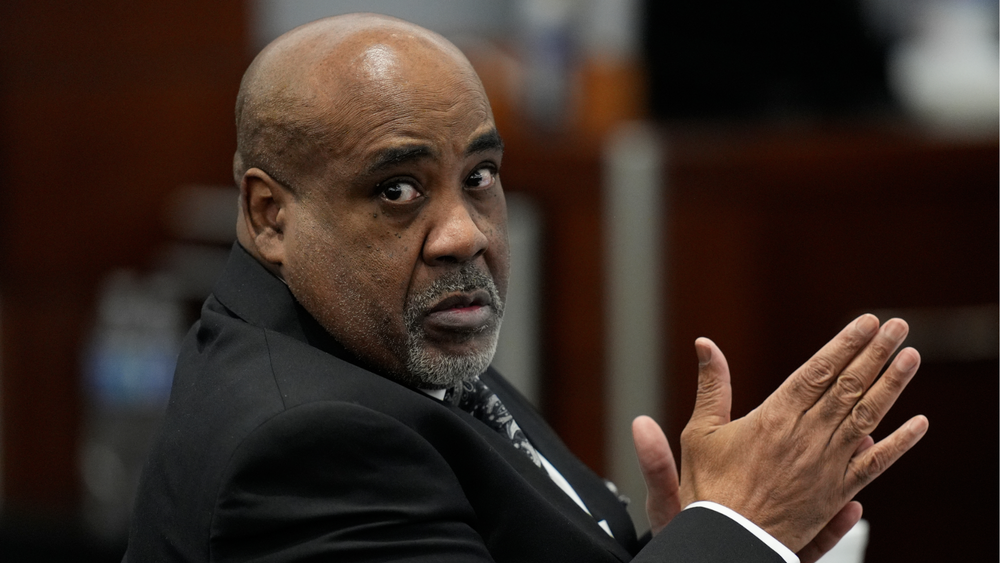
Testimony concludes in Lindsay Clancy murder trial; jury to hear closing arguments Thursday
Clancy has pleaded not guilty to three murder charges.

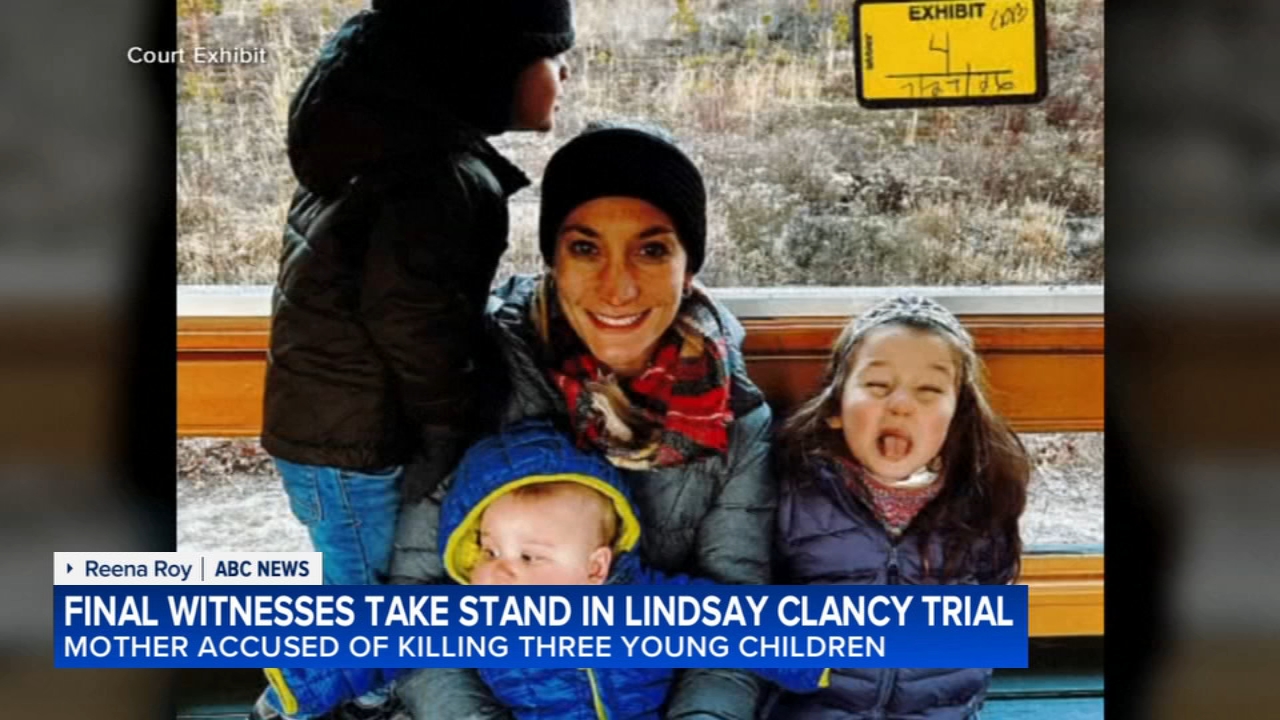
PLYMOUTH, Mass. -- Testimony concluded Wednesday in the murder trial of Lindsay Clancy, a mother accused of strangling her three young children in a case that has drawn attention to postpartum mental health.
Closing arguments are expected to begin Thursday, before the jury begins deliberating.
Clancy, 36, has pleaded not guilty by reason of lack of criminal responsibility, with her lawyers arguing she was experiencing postpartum psychosis when she killed 5-year-old Cora, 3-year-old Dawson and 8-month-old Callan Clancy at the family's home in coastal Duxbury, Massachusetts, in January 2023. The rare mental illness is linked to the stress, sleep deprivation and hormonal changes that follow childbirth.
Prosecutors say Clancy planned the killings and understood her actions were wrong.
Clancy did not testify during the trial, which is in its fifth week. The defense called 10 witnesses, including some of Clancy's friends and relatives, while prosecutors called more than 70 witnesses, including her then-husband.
Testifying as the final rebuttal witness for the prosecution, a forensic psychiatrist at the University of Virginia and a senior psychiatrist for the FBI's Behavioral Analysis Unit said Wednesday that he did not believe Clancy's account that a voice ordered her to kill the children.
Prosecutor Jennifer Sprague asked Dr. Gregory Saathoff a series of questions about Clancy's account: Did the voice tell her where to kill the children? How to kill them? What to use? In what order? Saathoff answered no each time.
"Having no instructions as to how to do it, but being able to execute those decisions ... that is surprising that she's able to accomplish all of this without any other kind of direction or plan," he said.
All three children were strangled with exercise bands in the family's basement before Clancy tried to kill herself while her husband was getting takeout and at a pharmacy on Jan. 24, 2023. Saathoff said her ability to accomplish everything she did without direction indicated Clancy "had control, control of the sequence of what she was doing throughout."
"In the small amount of time that Miss Clancy had in the home without her husband, it was important, in order to carry this out, as well as her suicide, to do this quickly, methodically, and alike," he said.
On Tuesday, Saathoff said he found it unusual that Clancy said the voice stopped once she was done strangling the children, that the voice was constant rather than intermittent and that she never previously reported hearing a voice to her medical providers. She also gave a different timeline to other evaluators about when she first heard the voice that day, he said.
"Committing the act is not curative of the voice," Saathoff said of the voice stopping abruptly. "I've not ever seen that."
Defense attorney Kevin Reddington began his cross-examination of Saathoff on Wednesday by trying to cast doubt on Saathoff's expertise in postpartum psychosis and portray him as someone closely aligned with law enforcement, questioning him about his work with prisons, the Justice Department and the Virginia attorney general's office.
Saathoff testified that he treated women with postpartum psychosis while working at a state hospital in the 1980s and 1990s, while much of his more recent research has focused on such subjects as extremist violence, national security and political radicalization.
Reddington also asked Saathoff about Clancy's attempts to search online for information about postpartum depression, her visits to multiple maternal and mental health providers, disclosures to her mother and then-husband that she was suicidal and feared that she would harm her children, and calls to a suicide hotline - all attempts that Reddington contended establish Clancy realized something was seriously wrong and made a sincere effort over time to get help.
Reddington asked whether Saathoff believes that Clancy decided to kill her children because she "no longer liked the life she thought she wanted" and was making "a selfish choice" to "manipulate her providers, seek out a quick and easy fix when she was feeling depressed and anxious."
"I think that statement that you read really minimizes what she was going through," Saathoff responded.
If you or someone you know is struggling with thoughts of suicide, call or text 988 or chat 988lifeline.org. Free, confidential help is available 24 hours a day, 7 days a week. You are not on your own.
PREVIOUS COVERAGE: