Northern Lights: Stunning photos capture aurora borealis lighting up the night sky
Expert explains how geomagnetic storms can affect more than just skywatchers

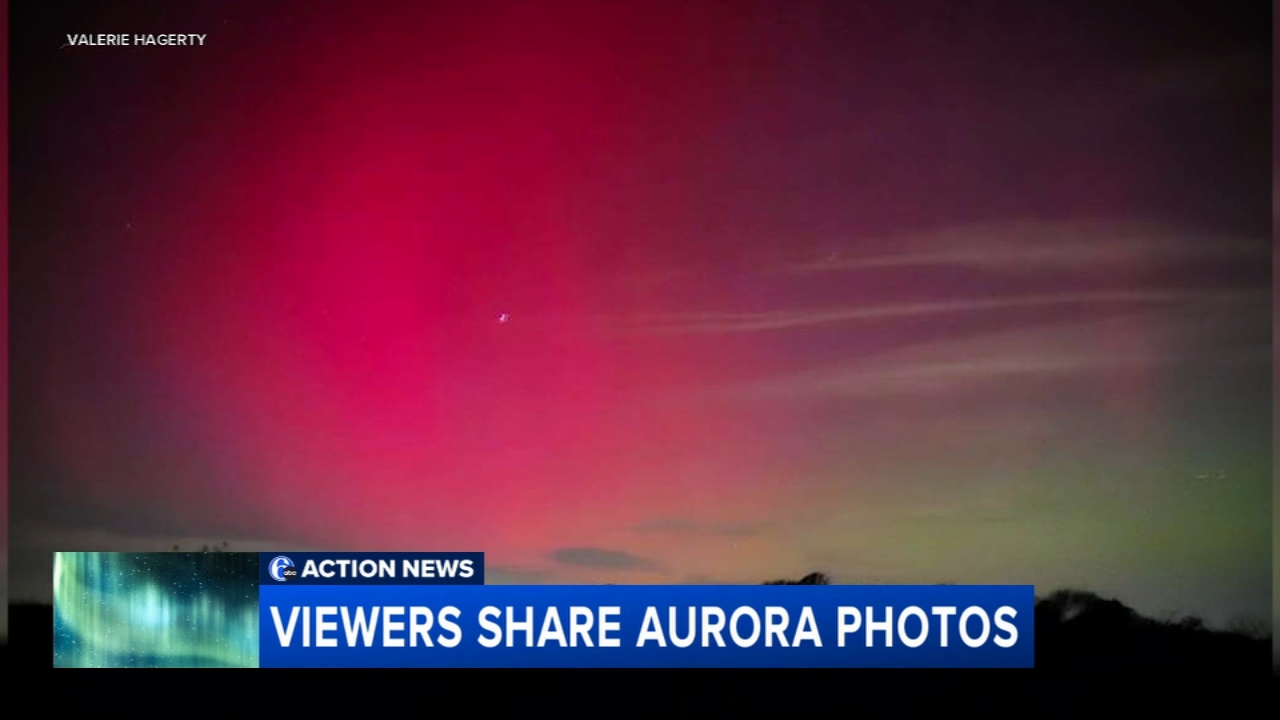
PHILADELPHIA (WPVI) -- The Northern Lights made a rare appearance Tuesday night, stretching far beyond their typical range, with sightings reported from as far south as Alabama and Florida, to parts of the Northeast, including Pennsylvania and New Jersey.
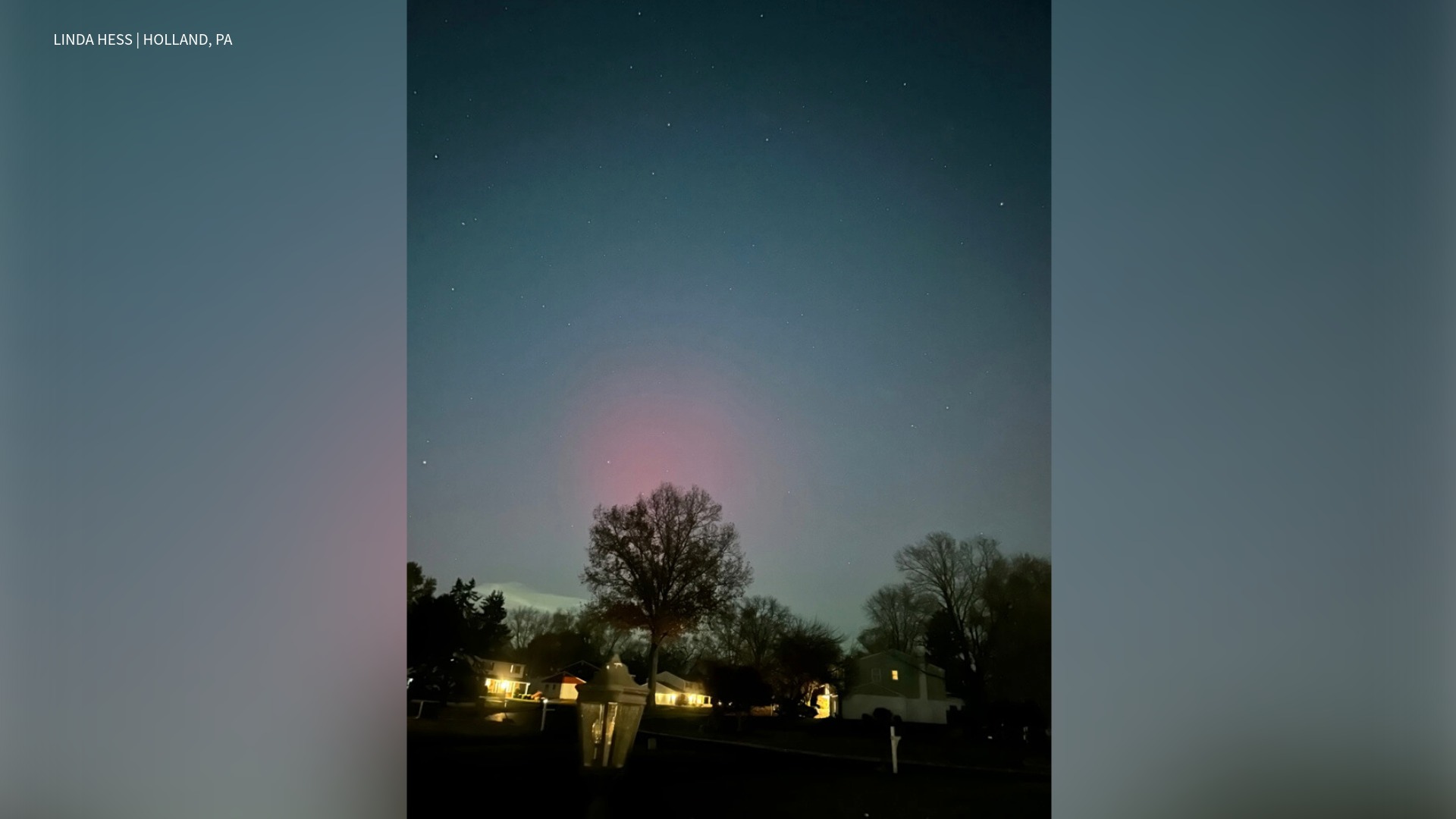
Across the tri-state area, residents captured stunning photos of the aurora borealis lighting up the night sky in bright pinks and greens.
The widespread display was triggered by a powerful burst of energy from the sun, known as a coronal mass ejection, which interacted with Earth's magnetic field to produce the vivid colors.
Experts say parks and other dark-sky areas are ideal for viewing the aurora, away from the glare of city lights.
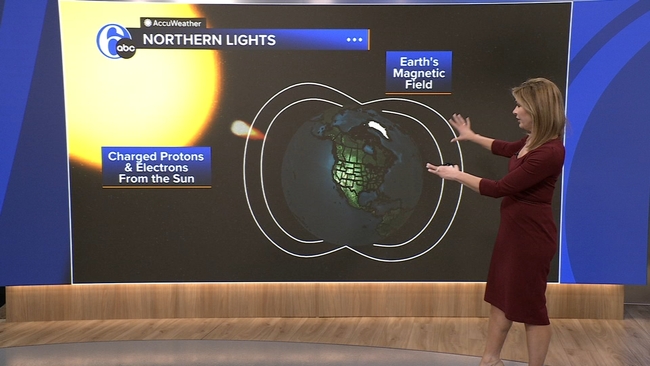
Some viewers may have noticed that the colors didn't appear quite as vibrant to the naked eye. Cameras often enhance aurora colors through long exposures, capturing light that isn't as visible without special settings.
The National Oceanic and Atmospheric Administration (NOAA) monitors space weather continuously, since these geomagnetic storms can affect more than just skywatchers.
"If you use precision GPS systems, there could be degradation on that. If you need to be accurate less than an inch, it could be off much more than that as this type of activity continues," said Shawn Dahl of NOAA's Space Weather Prediction Center. "We've been communicating with space launch officials because of a pending launch coming up -- these can impact the electric power grid of our country."
The conditions were a bit cloudy for most on Wednesday night, but some residents, like Linda Hess in Bucks County, captured the sky show.
Viewers are encouraged to share their photos by visiting 6abc.com/share.