Pennsylvania marks Overdose Awareness Day as officials highlight naloxone program's impact


PHILADELPHIA (WPVI) -- Pennsylvania marked Overdose Awareness Day with a proclamation signed by Gov. Josh Shapiro honoring those who lost their lives to overdoses.
The proclamation comes as state and city officials highlighted a naloxone distribution program they say has helped reduce overdose deaths.
"Overdose rates declined by 18% last year. That's worth celebrating," said Carlton Williams, Philadelphia's managing director.
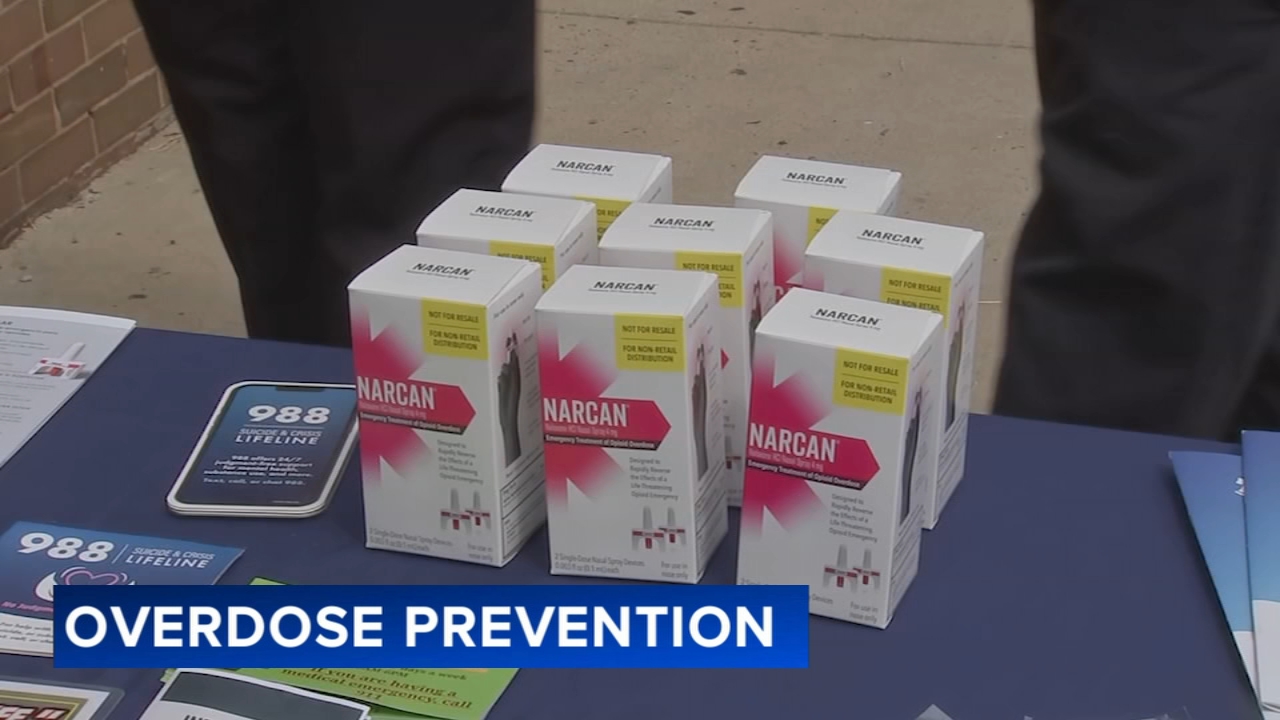
Officials attributed part of that decline to a program launched one year ago that distributes naloxone, an anti-overdose medication, through boxes located outside all 61 Philadelphia fire stations. The initiative makes the medication available at all 61 firestations across the city where Naloxone is stored in a newspaper style box for pickup with no questions asked.
"It is available 24 hours a day, seven days a week at no cost; no appointment, conversation or personal information is required," said Philadelphia Fire Deputy Commissioner Martin McCall.
Officials said more than 41,000 doses of naloxone have been picked up from Philadelphia fire stations during the program's first year. Those doses have been used in more than 17,600 overdose reversals.
"These numbers are about much more than doses or boxes or kits. They represent people," said Dr. Latika Davis-Jones of the Pennsylvania Department of Drug and Alcohol Programs.
Known as the Naloxone in Black initiative, the program is designed to reduce overdoses and address disparities in overdose deaths. Officials said African Americans die from overdoses at a rate more than twice as high as their white counterparts.
Top Stories



The initiative is funded through Pennsylvania's Overdose Prevention Program. Officials said Engine 11 on South Street has distributed more naloxone than any other fire station in Philadelphia.
Moving forward, city leaders said they will continue treating overdoses as a public safety issue. Officials announced that annual overdose prevention training will become a standard requirement for all Office of Public Safety staff.
"Beginning this year, annual overdose prevention training will be a standard requirement for all Office of Public Safety staff," an official said.
City leaders also plan to expand the initiative by making naloxone available in additional communities.
"Now is not the time to become complacent," Geer said. "The progress we've made shows prevention works and we need to build on that momentum."