

Raising awareness, spearheading research on ovarian cancer


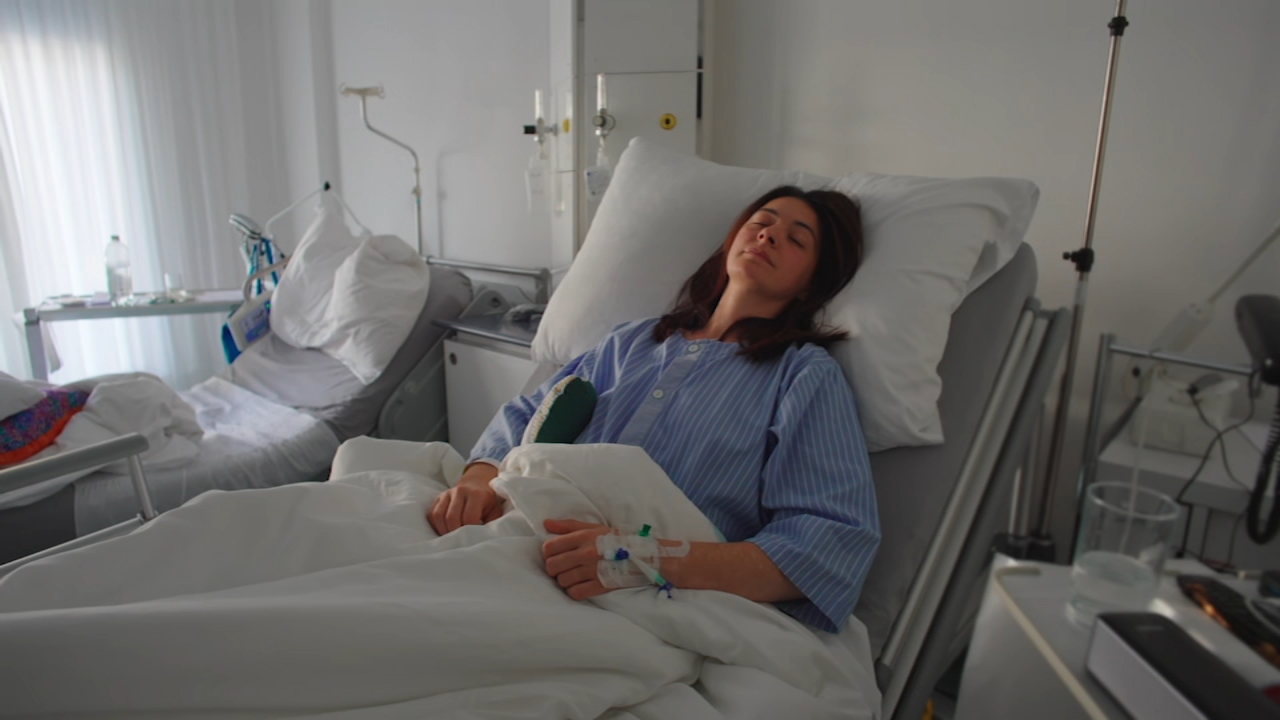
BLUE BELL, Pa. (WPVI) -- Ovarian cancer doesn't give early warnings, and there's no good screening tool.
But that doesn't mean this "silent killer" isn't being aggressively pursued in the lab and clinic. Many of those efforts are happening right here in our area.
Family and friends were everything to Diane Chaiken of Blue Bell, Pennsylvania.
"She just loved children and she loved to help people," recalls her husband Warren.
Three years ago, this lifelong problem solver faced her ultimate challenge.
"She just wasn't feeling right," Warren says. "She had a little spotting."
Diane's gynecologist sent her for a CT scan.
"She went home and an hour later, they called her and said, 'you need to get back here,'" he remembers.
After that return, Diane called her husband at his office, distraught. He ran out immediately.
Diane had stage 3 ovarian cancer.
Warren Chaiken says she had a subtype called clear cell, which about 10% of ovarian cancer patients have.
Dr. Angela Jain of Fox Chase Cancer Center says this is a cancer with very vague symptoms.
"Sometimes some indigestion, sometimes some constipation, or sometimes some diarrhea," Dr. Jain notes.
Or it may just be pressure, fatigue, or not being able to finish a meal.
Dr. Jain says the key is being alert for a group of symptoms, or ones that won't go away.
She says surgery - and final diagnosis - are usually the first step.
Top Stories


"More often than not, patients will need chemotherapy afterwards," she says.
Doctors can now add newer drugs to the regimen.
"Some are called PARP inhibitors. Some are some new ADCs that work a little bit differently than traditional chemotherapy," Dr. Jain explains.
Diane began treatment immediately at Fox Chase, and her initial treatment was successful, putting her into remission for close to a year.
Unfortunately, 70% of women relapse after their first-line treatment. Diane's cancer later returned.
At Fox Chase, Warren learned of Unite for Her, which offers free integrative therapies, and services for breast and ovarian cancer patients.
Unite for Her founder and CEO Sue Weldon says patients choose what works best for them.
"One may choose the counseling and acupuncture, someone else might do nutrition and fitness, someone else may do oncology massage yoga," Weldon explains.
Diane joined a support group of about 10 women. Her husband says in many ways, it was like a recipe exchange, "But in recipes, it was what was going on with them, how they got through their days, what medicines were working, which weren't working, the reactions and all that. And it really was truly a godsend for her."
"They were absolutely very strong women and women that really helped Diane. And I think she helped them too," he says.
She was still there for others to the end, getting to an important wedding shortly before she passed.
"She wanted to live her life and she wasn't going to let cancer get in the way of that," Warren says.
Diane's family is now turning her legacy into progress through a foundation focused on ovarian cancer prevention, earlier detection and new treatment options.
The Chaiken family has also created a visiting professorship at Fox Chase, enabling other outstanding ovarian cancer researchers and clinicians to bring their expertise to Philadelphia..