Commuter Crisis: First round of SEPTA cuts in effect | What you need to know

*** EDITOR'S NOTE: Due to a judge's order on Aug. 29, all planned SEPTA cuts are on pause pending a Sept. 4 hearing. The Aug. 24 service cuts remain in effect. Click here to read the latest on the Commuter Crisis. ***
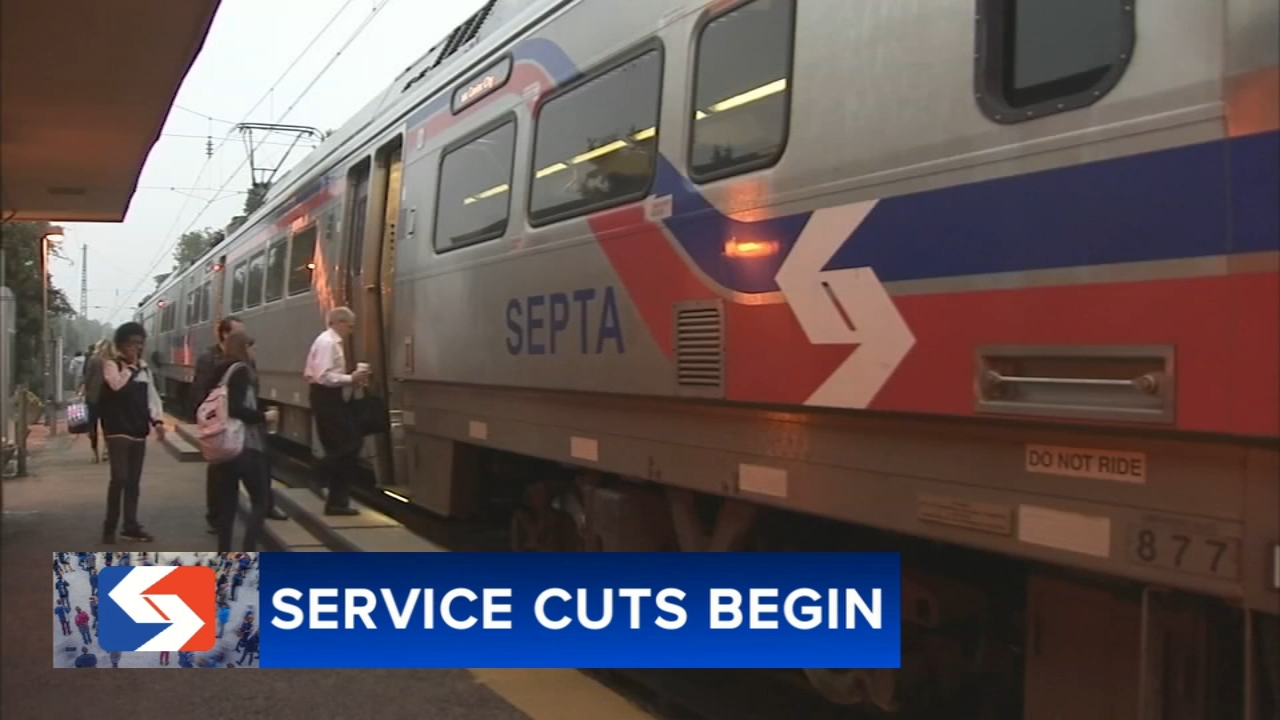
The first phase of major service reductions for SEPTA are now in effect on Sunday, due to a $213 million deficit this fiscal year for the transit agency in Philadelphia.
Earlier this month, SEPTA officials said that if they were not able to secure funding by August 14, they would be forced to move forward with the cuts.
RELATED: SEPTA's board approves 'doomsday' budget that drastically slashes service
That includes a 20% cut to all services, including the elimination of 32 bus routes and significant reductions in trips on rail modes.
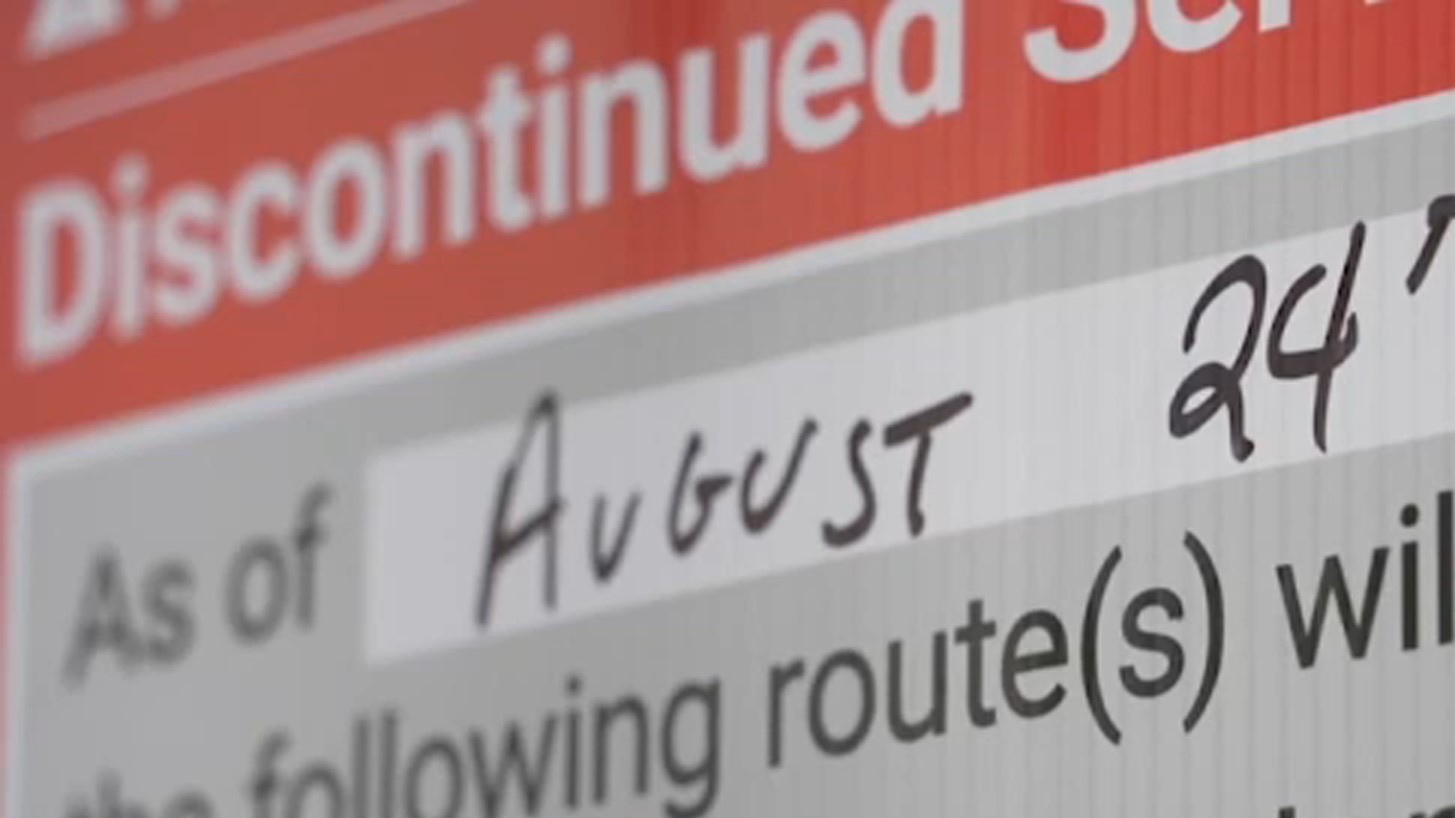
The August 24 service cuts are just the first of several steps the transit agency will take this year in response to the budget shortfall.
SEPTA will ultimately be cutting 45% of all service and raising fares by 20%.
The SEPTA cuts come as students across Philadelphia prepare for the first day of school on Monday.
SEPTA officials say even if they are somehow able to get the funding they need, it will take a few days to get normal operations back up and running.
Service cuts now in effect
Most bus and Metro service cuts are the first to be impacted.
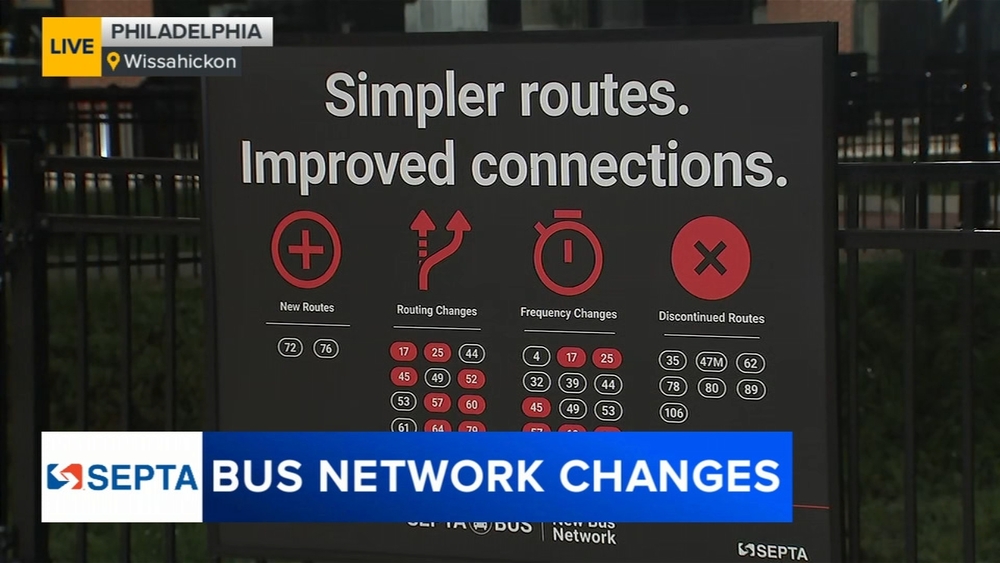
There are 32 bus routes that will been eliminated. Some buses will also no longer go as far into the city as they used to.
Bus Routes being eliminated include: 1, 8, 12, 19, 30, 31, 35, 47M, 50, 62, 73, 78, 80, 88, 89, 91, 106, 120, 126, 133, 150, 201, 204 (Sept. 27, 2025), 206, 311, 452, 461, 462, 476, 478, 484, BLVD DIR, MANN LOOP
Commuters will also notice a significant reductions in trips on rail modes.
There will also be an end to all special services, including the sports express.
The cut to sports express service would happen at the end of this month, right before the Eagles host the Cowboys at Lincoln Financial Field to kick off the season on September 4.
SEPTA expects significant delays for fans traveling to and from Lincoln Financial Field, especially after the game.
The agency typically runs 10 additional trains to accommodate the 14,000 to 17,000 fans who leave the stadium within an hour.
That number will now drop to just four.
The transit agency also cautioned that other major events could be affected, including potential Phillies playoff games, concerts, and next June's FIFA World Cup soccer tournament.
New SEPTA schedules reflecting service cuts as of August 24:
Fall bus and metro schedule changes HERE
Fall Regional Rail schedule changes HERE
Officials are urging people to utilize the SEPTA website and app.
"We have a trip planning feature where you can plug in your route or destination and see what will be the best option for you," said SEPTA spokesperson Andrew Busch ahead of the cuts. "If you have a bus route eliminated, it's going to show you what's running there that you may be able to use as an alternative."
Other planned cuts, fare increases to come
A 21.5% fare increase will take effect on September 1, meaning that the base fare goes up to $2.90.
A weekly TransPass+ will also go up from $25.50 to $31.
A monthly TransPass+ is increasing from $96 to $116.
If you're looking for a one day convenience pass, that will now be $7.50, instead of $6. The three day convenience pass is also rising to $19, compared to $15.
Children under the age of 12 and senior citizens with a Senior Fare Card are still free.
A ParaTransit/Shared Ride will also now be $5.75, instead of $4.25.
There will also be a complete hiring freeze later in the month.
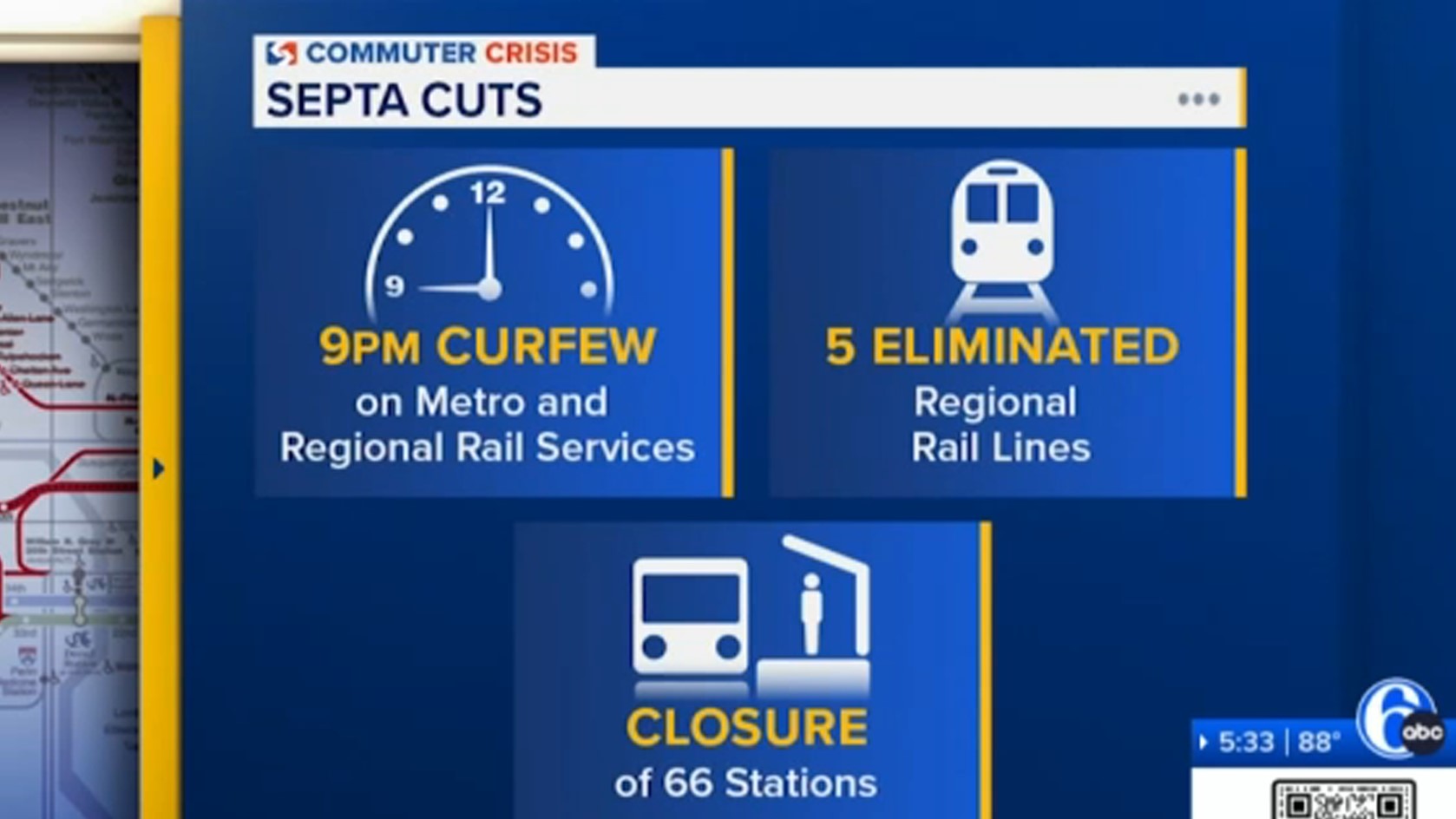
A second wave of service cuts would begin on January 1, 2026, which would include the elimination of five Regional Rail lines, as well as a 9 p.m. curfew on all rail services.
Regional Rail fares are also increasing:
-Zone 1
Kiosk/Ticket office/SEPTA Key fare: $5
On board fare: $7
-Zone 2
Kiosk/Ticket office/SEPTA Key fare: $6.50
On board fare: $9
-Zone 3
Kiosk/Ticket office/SEPTA Key fare: $7.75
On board fare: $10
-Zone 4
Kiosk/Ticket office/SEPTA Key fare: $8.75
On board fare: $11
-Zone NJ
Kiosk/Ticket office/SEPTA Key fare: $11
On board fare: $13
Another 18 bus routes would also be eliminated in an effort to achieve an overall 45% reduction in service, according to SETPA.
Options to help get around Philly without breaking the bank
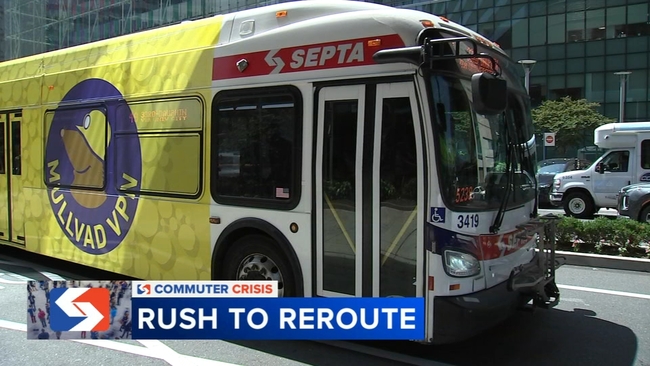
Action News has done the homework to see what other options are out there for riders.
- Share-A-Ride
Share-A-Ride is a resource that can help find travel options.
App users can access the database to find matches for carpools, van pools, they can find transit routes.
"It's a free computerized system," said Stacy Bartels with the Delaware Valley Regional Planning Commission.
It also connects people who want to bike or walk together.
The important thing is to put your information into the database, which currently has about 3,000 people.
"They may not get a match right away, but the more people we have going into the database, the better the chance of matching," Bartels added.
If more people sign up, existing carpools can grow and new ones can be created.
- Rideshare
Uber now lets you share where you ride with strangers. You can also choose Group Rides, where you can invite friends.
Then, there is also the company's latest option, Route Share, is designed to function like a commuter shuttle running every 20 minutes during peak times from 6 a.m. to 10 a.m. and 4 p.m. to 8 p.m, with designated pick-up and drop-off points.
"Routeshare can save users up to 50% off the UberX price," said an Uber spokesperson.
For even more significant savings, try Uber Transit, which provides a public transit route, sometimes combined with an Uber ride.
You can also buy a "Price Lock Pass" on up to 10 routes per month.
If the upfront fare is lower than your locked price when you request a ride, you'll get the lower price.
- Commute with Enterprise
The rental car company, Enterprise, has teamed up with companies to match employees who live near each other, then provides them with vehicles to use.
Enterprise said in an email to Action News that it currently has 60,000 commuters signed up nationwide. Each ride consists of 4-15 riders who live near each other or along a route, and share rides to and from work.
Enterprise takes care of maintenance and vehicle liability insurance.
Some carpools and vanpools require a partnership with companies, so talk to your boss.
Also, be aware that Delaware and New Jersey also offer free commuter services programs to get into Philadelphia.
How students can navigate the cuts as school begins
There are more than 198,000 students in the School District of Philadelphia, and nearly a quarter of them rely on SEPTA to get to and from school.
And these SEPTA cuts come as students across Philadelphia prepare for the first day of school on Monday.
Even if your route is not among the cuts, officials have warned that even the bus routes that remain could have issues.
So the district is encouraging parents to make a plan and consider options, like carpools.
One of those options is called the Parent Flat Rate program.
"(Parents) drop their students off and pick them up at dismissal, they can get $300 (per month)," said Monique Braxton, Deputy Chief of Communications for the School District of Philadelphia.
The $300 per month is per household. Parents who take their children to school but have them ride the bus home can be reimbursed $150 a month.
However, you have to qualify, according to district officials.
"Your child has to live more than a mile and a half from their school," Braxton said.
Nearly twice as many students ride SEPTA compared to the number of students who ride the yellow school buses, so some might wonder why we can't just add more school buses?
However, officials say, right now, adding more yellow buses is not an option.
"There's a shortage of bus drivers or resources to go out and commandeer to get a lot of additional school buses," said School District of Philadelphia Superintendent Tony Watlington.
For more information on the Parent Flat Rate program, including the online application, click here: https://www.philasd.org/transportation/#parentflatrate
SEPTA service cuts could add 275,000 vehicles to local roads, experts say
Transit experts warned that the SEPTA service cuts could result in approximately 275,000 additional vehicles on local roadways, a number just shy of Pittsburgh's population.
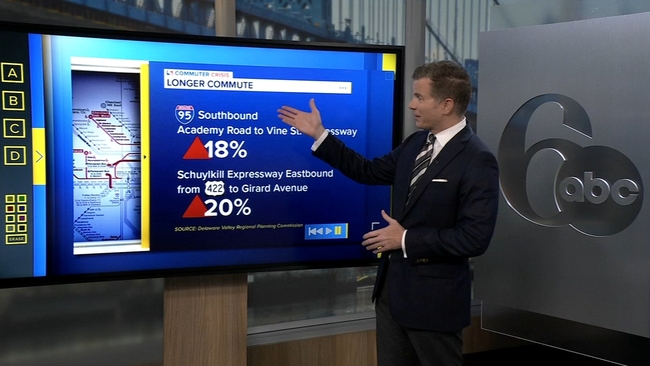
The Delaware Valley Regional Planning Commission analyzed the potential impact and found that already congested roads across the region would see significant increases in travel times and decreases in average speeds.
According to Action News traffic anchor Matt Pellman, the commission's data shows that commute times on major corridors could rise sharply.
For example, southbound travel on I-95 from Northeast Philadelphia to Center City could increase by 18%. That means a 40-minute drive from Academy Road to the Vine Street Expressway would take 47 minutes.
On the Schuylkill Expressway (I-76), the commute between King of Prussia and Girard Avenue could take 20% longer - from 35 minutes to 42 minutes.
Suburban routes would also be affected.
Speeds on the Blue Route (I-476) are expected to drop by more than five miles per hour, from 37.1 mph to 32.5 mph.
Drivers heading north on I-95 through Delaware County to Center City could see a 10% increase in travel time, partly due to the proposed elimination of the Wilmington-Newark line.
In Bucks County, interstate delays on highways like I-95 and I-295 could rise by up to 30%, with the discontinuation of the Trenton line contributing to the congestion.
Chester County may face the steepest impact, where the potential loss of the Paoli-Thorndale regional rail line could lead to a 40% increase in delays on Route 202 - nearly doubling commute times.
How other major cities are tackling their transit budget problems
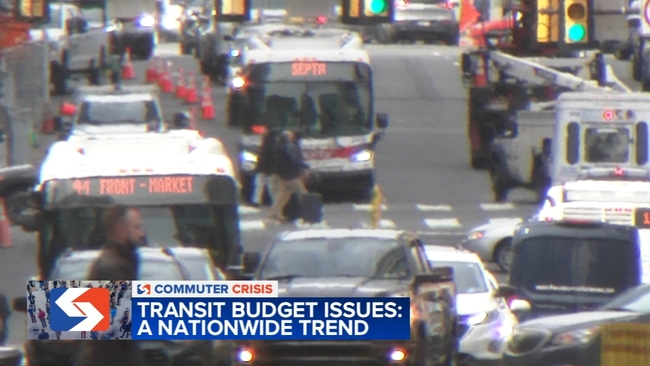
When other major cities look at the SEPTA crisis, they don't feel sorry for us. They're too busy being scared for themselves.
This is true, from the recent troubles for the MTA in New York City to the crisis facing BART and Muni in San Francisco right now.
But no city twins Philadelphia more than Chicago. They too have pandemic ridership disruption and the loss of COVID funds.
They too are waiting on statehouse intervention, in their case to deal with a $700 million hole. They are also facing a slash in service, perhaps as much as 40%, come January.
However, Chicago doesn't have our partisan drama, since all its top lawmakers are Democrats.
Advocates in both cities say the answer is a new dedicated funding source that taxes modern living like package deliveries, ride shares and car leases.
Stay with Action News for the latest with SEPTA cuts