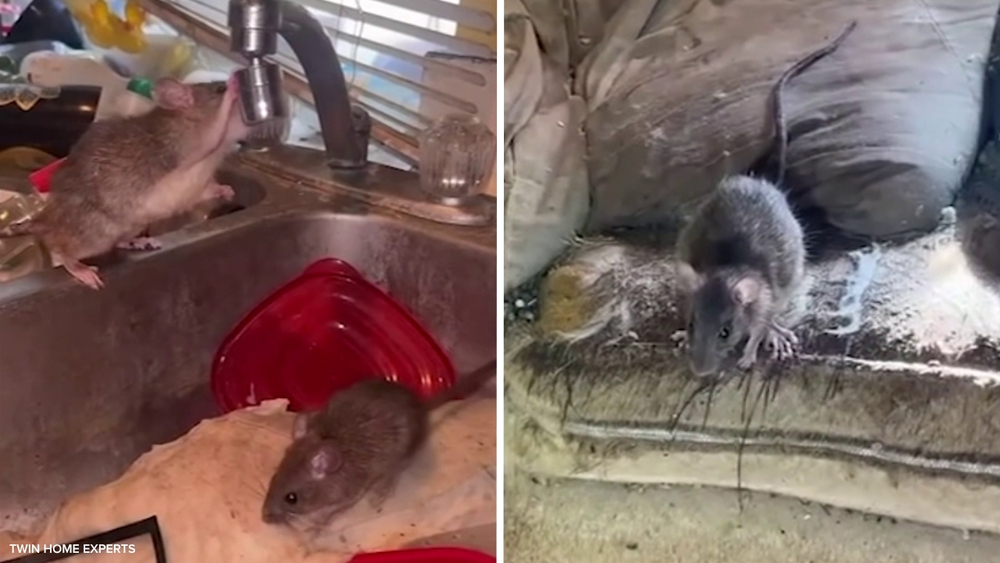
Mutating mice becoming growing problem in Philadelphia, researchers say


PHILADELPHIA (WPVI) -- If the thought of mice and rats makes your skin crawl, then the phrase "mutating mice" probably sounds like something out of a horror movie.
But researchers say it's a real, growing problem, right here in Philadelphia.
A recent Rutgers University study examined rodent samples from New York City, Washington, D.C., New Jersey, and the Philadelphia region. Researchers found that mice are evolving rapidly, with many now able to survive poisons designed to kill them.
"They show a much higher mutation frequency than we thought before," said JinJia Yu, a Rutgers postdoctoral fellow.
"From those samples, we found that about 70% of the mice populations contained mutations," Rutgers entomologist Changlu Wang said.
The study also looked at rats. While researchers say rats are not mutating in the same way, they are still evolving, learning to avoid traps and other extermination methods.
"They're getting smarter by the day. They're just ignoring the traps and going over them," said Terrell Williams, owner of The Bug Bully, a pest control company serving Philadelphia and its suburbs.
Williams said the industry began noticing changes about five years ago.
"It used to work right away, but what's happening is it's starting to take longer for the application to work; that's what we've been noticing," he said.



It's keeping him busy.
"It's a big increase in demand. I mean, we've been running every day, seven days a week, it's not a day that we're off," Williams said.
Experts warn that as rodents evolve, pest control strategies must evolve as well. They recommend reducing pesticide use and focusing more on prevention and sanitation while chemists work to develop new formulas - a process that can take years.
"Developing a new, active ingredient is a very slow, very expensive process, so I don't expect that they'll have a new active ingredient soon," Wang said. "They may have different products or different formulations. So that's why we have to really be careful how we want to use those products, because we want to lengthen their longevity so they can be used for many years."
This issue is not new; rodents have been evolving for the last 40 years or so, ever since modern pesticides became the norm.
But research in the U.S. is new, and the researchers we talked to from Rutgers would like to do more of it.