Air quality alerts still in place as smoke hangs over Philadelphia region | Live updates

WPVI logo
Last updated: Friday, July 17, 2026 10:45PM GMT
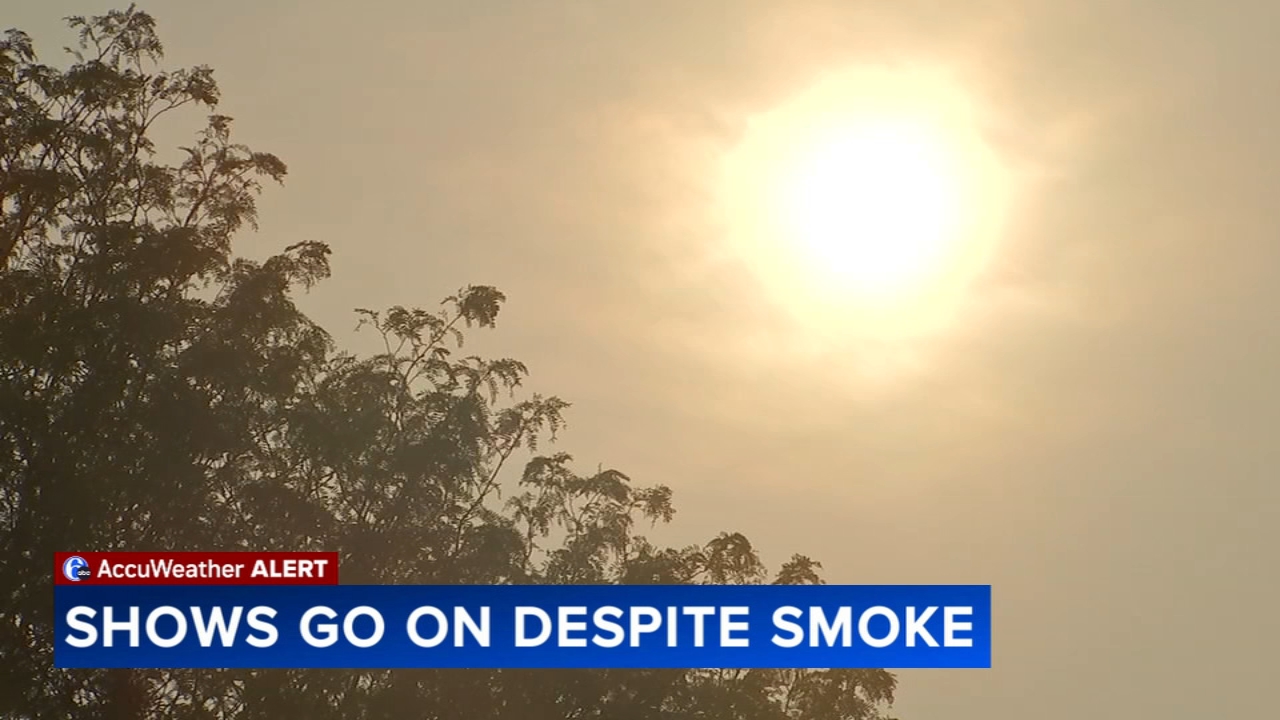
Latest on smoke hanging over Philly region

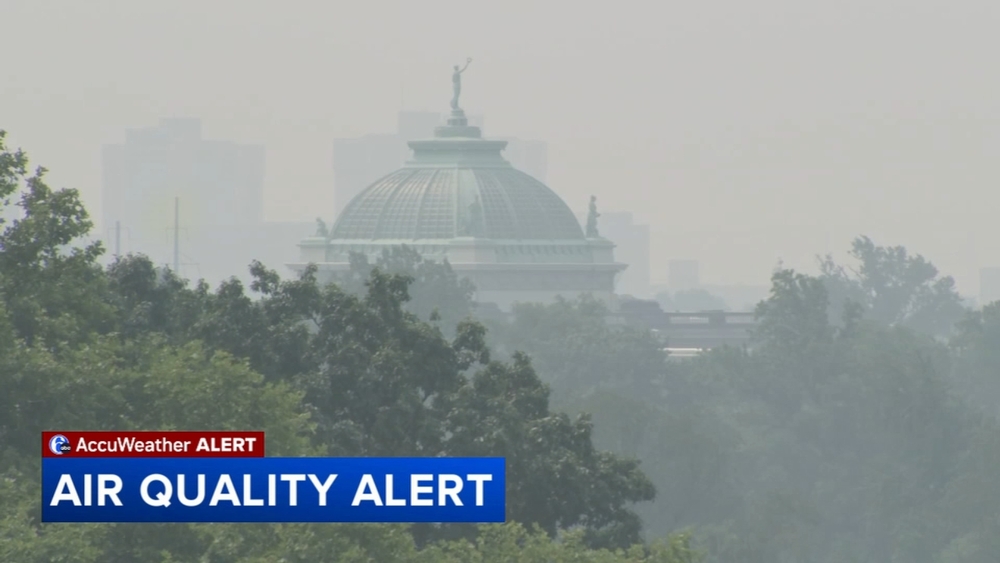
PHILADELPHIA (WPVI) -- Air quality alerts remain in effect for Philadelphia, Pennsylvania, New Jersey and Delaware.

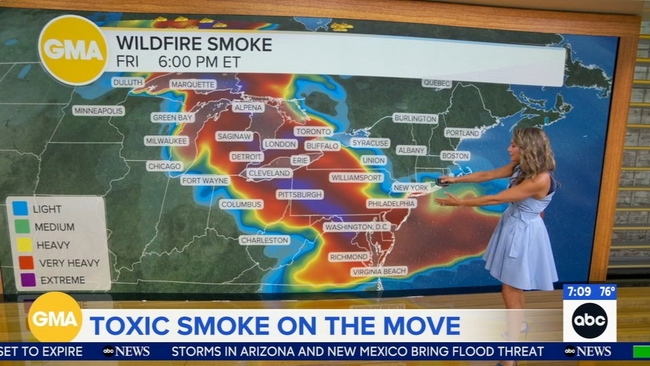
As a warm front lifts north, it will become increasingly humid, but the air quality will improve Saturday as the wildfire smoke gets lifted into New England.

Follow along for live updates.

WPVI logo
Jul 17, 2026, 9:06 PM

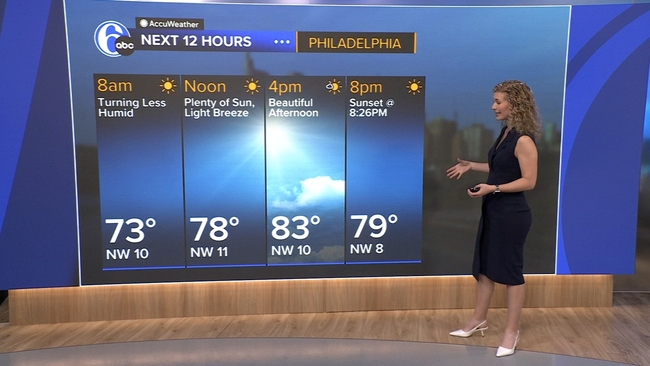
Latest AccuWeather forecast on air quality and extreme heat

AccuWeather: The tropical feel returns Saturday

FRIDAY: We again could see smoke reducing visibility and creating air quality issues. Clouds mix with sunshine, high 90.

SATURDAY: The tropical feel returns with dewpoints in the 70s. It's looking like an unsettled day with scattered downpours and potentially gusty thunderstorms. Heaviest rounds may be in the morning and late evening. Any downpour will bring an elevated risk for flooding, high 83.

Get the latest AccuWeather forecast at 6abc.com/weather.

WPVI logo
11:55 AM GMT

NJ offers N95 masks to commuters amid wildfire smoke

New Jersey Governor Mikie Sherrill says she has directed NJ TRANSIT and the New Jersey Turnpike Authority to make select quantities of masks available to commuters and at rest areas along the Turnpike and Parkway as smoke from Canadian wildfires continues to impact air quality in our region.

Sherrill added that the Port Authority will also be distributing masks.

NJ Transit says travelers can stop by a participating Customer Service location and ask a representative for assistance.

Officials say masks will be available while supplies last.

ABCNews logo
11:28 AM GMT

Track and timing of Texas storms and smoke conditions

ABC News' Chief Meteorologist Ginger Zee reports on the Texas storms causing flash flood emergencies and the air quality alerts in the Midwest and Northeast.

ABC News' Chief Meteorologist Ginger Zee tracks timing of smoke conditions
ABCNews logo
11:04 AM GMT

Can wearing a mask help as smoke from Canadian wildfires blankets the US?

For those who need to work outdoors, are more sensitive to smoke or are in a high-risk group, wearing a mask can help protect you -- as long as it's the right kind of mask.

Kai Chen, an associate professor of epidemiology at Yale School of Public Health, told ABC News that the best type of mask to wear is an N95, which is designed to filter at least 95% of airborne particles.

Chen said wildfire smoke is made up of fine solids, gases and fine particles, the latter of which is the most concerning.

Fine particulate matter, known as PM2.5, is 30 times smaller in diameter than a human hair. Because these particles are too small to be seen with the naked eye, they can easily enter the nose and throat and can travel to the lungs. These tiny particles get trapped in the lungs, and some of the smallest particles can even circulate in the bloodstream, according to the American Lung Association.

PM2.5 can cause both short-term health effects, even for healthy people, including irritation of the eyes, nose and throat; coughing, sneezing and shortness of breath and long-term effects such as worsening of conditions including asthma and heart disease.

"In order to protect yourself from that, we really need powerful filtration ... wearing an N95 mask is key," Chen said. "The normal surgical mask, unfortunately, would not be good enough."

Chen said surgical masks can block the majority of respiratory droplets from a cough or a sneeze but are not effective at filtering PM2.5. Similarly, paper dust masks, cloth masks, wet cloths and bandanas are not effective at filtering out fine particulate matter, he said.

Chen said people should make sure their N95 mask is certified by the National Institute of Occupational Safety and Health. The N95 should have two straps that go around the head and fit over the nose and under the chin, creating a tight seal.

N95 masks will not work properly without a tight seal, so children or people with facial hair might get reduced protection. Most healthy people can wear them safely, but some may notice it takes more effort to breathe due to the snug seal.

If you develop significant shortness of breath, dizziness while wearing an N95 mask, remove it once you are in a safe cleaner-air environment, and seek medical attention if symptoms do not improve.

6abc Digital Staff Image
11:01 AM GMT

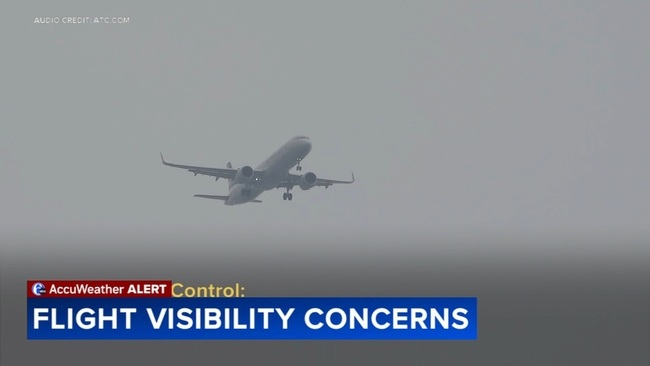
Hazy conditions causing flight visibility concerns at PHL

The hazy conditions are still impacting air travel.

Pilots flying into Philadelphia International Airport expressed concern about low visibility due to the thick wildfire smoke.

The FAA responded, saying it slowed traffic into the airport on Thursday.

More than 300 flights were delayed in and out of PHL Thursday and 12 were canceled.

The airport is reporting a dozen combined delays and cancellations already Friday.

The airport is reporting a dozen combined delays and cancellations already Friday.