Training for the Broad Street Run? Here are some tips to help you avoid injury

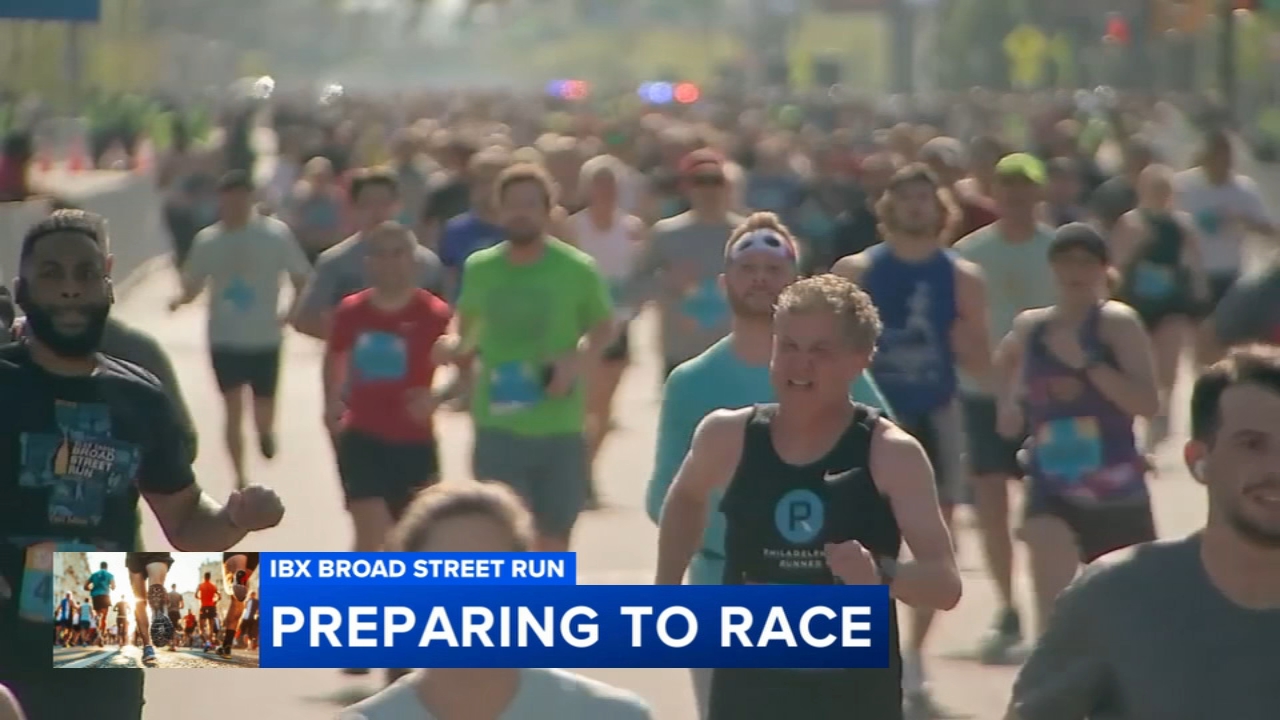
PHILADELPHIA (WPVI) -- The Independence Blue Cross Broad Street Run is just about a month away.
You're probably seeing lots of people out there training for it.
You probably also hear a lot of people talking about the aches and pains that come from all that running.
So, how do you prevent issues, and when should you go see a doctor?
As the race inches closer, physical trainer Rich DiGiacomo is already seeing runners push to the point of strain.
"The most often kind we get is overuse injury. People are running high mileage and there is wear and tear on the body," says DiGiacomo.
He says if you're just now thinking of running the race - don't. "It's going to be very tough, and maybe unrealistic to go from zero miles to a ten mile race in less than a month."
Clubs and online sites can help you find reputable running schedules.
DiGiacomo says there's also a lot of mistakes being made when it comes to stretching.
As it turns out, all the standing quad, leg and calf stretches - called static stretches - are fine to cool down with, but not to warm up.
"What we really teach is that when you prepare for running, it's better to do a dynamic active warm up."
He recommends a three to five minute cycle that consists of thirty seconds or so each of squats, reverse lunges, heel lifts, high knees and butt kicks.
"The idea is short, simple, effective, covering all the major muscle groups of the legs, get your heart rate going a bit and you're on your way to the run."
As you get ready to race, there is a cardinal rule: Do not power through pain.
Go to a doctor and get a referral to a physical therapist, like DiGiacomo.
They will check your form, your cross and strength training, and help you with a customized plan to get you back in stride.
"Listen for some early warning signs. Are you having trouble walking? Is there a limp? Does the pain not dissipate after a reasonable amount of time? Maybe a few hours, maybe a couple of days," DiGiacomo says.
This close to the start of the race is not the time to get brand new.
Forget new fads and tamp down race day adrenaline, stick to your prep and pacing plan.
That way you can celebrate at the finish line, not convalesce.
"We unfortunately see people in the medical tent at the end of the race who maybe overextend themselves," DiGiacomo says.
He says to scale back after the race for a few days with stretches and walks, and maybe even kick your feet up.
"Something that is underutilized in running is elevation. Elevate your legs, get your feet above your heart level, help circulate everything out of the legs after a hard effort."